Blueberry Farming in India: A Beginner's Honest Guide
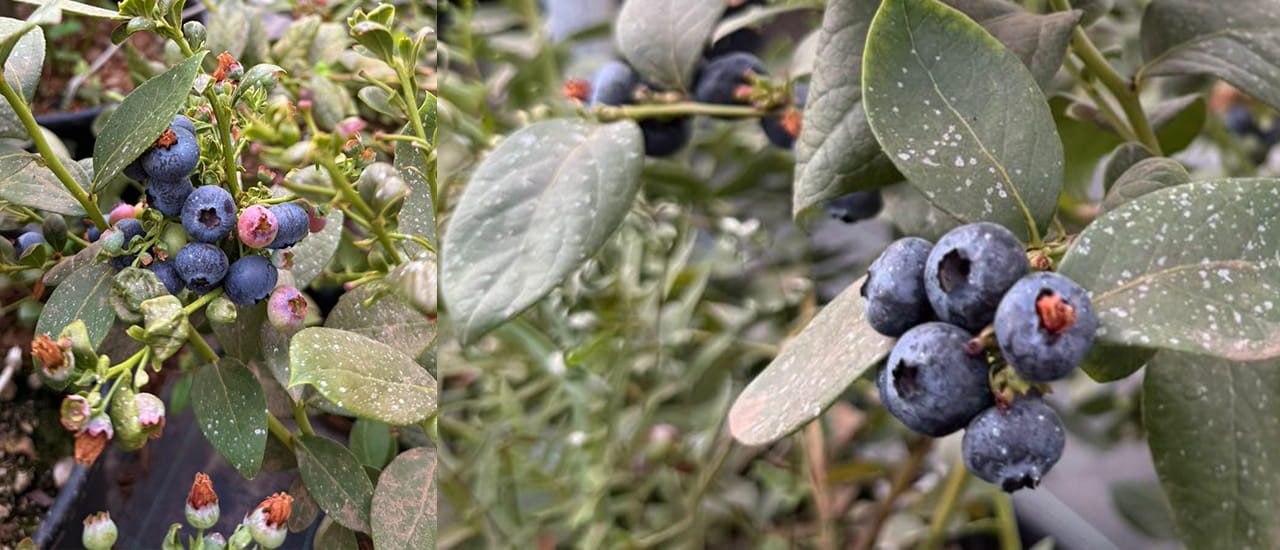
Blueberry farming in India means growing a high-value, technically demanding fruit - almost always in soilless grow bags under poly tunnels, not open ground. India produces roughly 2,000- 3,000 tonnes per year but imports over 20,000 tonnes. That gap is your opportunity. But blueberry is not a simple crop: it demands specific soil acidity, precise water quality, the right variety for your climate, and a 3- 5 year patience window before serious returns kick in. This guide covers what it actually takes, what it costs, what can go wrong, and how to decide if it makes sense for you.
The Real Opportunity (And Why It Exists)
The global blueberry market was valued at over $3 billion in 2025 and is projected to nearly double by 2034. Worldwide production crossed 2 million tons for the first time in 2024, according to the International Blueberry Organization (IBO). India's blueberry import shipments grew by 122% year-on-year in the 12 months ending May 2025 — a clear signal that demand is accelerating faster than domestic supply can keep up.
Globally, Peru alone cultivates over 22,000 hectares and produces around 225,000 metric tons. India is barely getting started.
So yes, the opportunity is real. But opportunity and easy money are very different things.
Why Urban India Keeps Paying ₹1,000+ per kg
Blueberries are consistently ranked among the most antioxidant-rich fruits available. They're a good source of vitamin C, vitamin K, manganese, and dietary fibre. Research links regular consumption to benefits for heart health, blood sugar regulation, eye health, and cognitive function.
This "superfood" positioning is what drives urban Indian consumers to pay a premium. The market isn't price-sensitive the way commodity crops are — and that's precisely what makes blueberry cultivation in India interesting from a business perspective.
Why Blueberries Are Difficult in India
Here's the uncomfortable truth that gets glossed over: blueberry is not a plug-and-play crop. It's a highly technical fruit that evolved in the cool, acidic soils of North America. Growing it in India means working against almost every default condition Indian agriculture offers.
The Three Non-Negotiables
1. Acidic soil (pH 4.5–5.5)
Most Indian soils sit between pH 6.5 and 8.0. That's not just "a bit off" — it's a completely different chemical environment. Blueberries simply cannot absorb nutrients in alkaline soil. This is why almost all commercial blueberry farming in India happens in soilless media (grow bags filled with cocopeat and coco chips) rather than in the ground.
2. Water quality
This is the silent killer that nobody talks about until it's too late. Blueberries are extremely sensitive to dissolved salts. Your irrigation water needs an Electrical Conductivity (EC) below 0.8 mS/cm. If your borewell water has high EC (common in many parts of India), your crop will suffer no matter how good everything else is. Test your water before you buy a single plant.
3. Climate match (chill hours)
Traditional blueberry varieties need 400–1,100 hours of cold exposure (below 7°C) to break dormancy and fruit properly. Most of India simply can't provide this. The game-changer has been zero-chill and low-chill varieties that bypass this requirement. But variety selection must match your specific region's climate, or you're set up to fail from Day 1.
Is Blueberry Farming Right for You?
Before going deeper into the technical details, it's worth asking the honest question first. The cost, time horizon, and skill level required rule out a lot of people — and knowing that early saves a lot of wasted energy.
Good fit if:
• You have access to quality water (EC below 0.8 mS/cm), or can economically treat it
• You can invest ₹5–75 lakhs per acre and wait 3–5 years for returns
• You're near an urban market or have logistics for cold chain delivery
• You're willing to learn the technical side or hire agronomist support
• You see farming as a long-term business, not a quick win
Think twice if:
• Your only water source has high salt content and RO treatment isn't economically viable
• You need returns within the first year
• You're planning to manage it entirely remotely with zero technical knowledge
• You're investing your last savings with no buffer for crop failure
• You have no clear buyer lined up and no city proximity for cold-chain delivery
Where Blueberry Cultivation in India Is Happening
Blueberry cultivation is currently underway (with varying degrees of success) across multiple states. Here's an honest state-wise picture:
• Maharashtra: the current leader in adoption, particularly around Pune and Nashik. Progressive farmers and proximity to premium urban markets like Mumbai drive the momentum. Zero-chill and low-chill varieties work best here.
• Karnataka: areas near the Nilgiri Hills and higher elevations of Coorg offer favourable conditions. The altitude and cooler temperatures help with fruit quality.
• Himachal Pradesh: the earliest adopter, with natural advantages of cool climate, naturally acidic soils, and adequate chill hours. Kullu has been a pioneering region. High-chill and mid-chill varieties perform well here.
• Tamil Nadu: high-altitude regions like Ooty and the Nilgiris are being explored, with some early success using protected cultivation and low-chill varieties.
• Uttarakhand: the hill districts (Dehradun, Nainital belt) offer good natural conditions, though infrastructure and market access remain challenges.
• Madhya Pradesh: IG International operates one of India's largest blueberry farms here, with 180 hectares and around 1,000 tonnes of annual production.
• Punjab and Haryana: farmers are experimenting, but summer temperatures regularly cross 45°C. Only zero-chill varieties (Biloxi) have any chance, and protected cultivation with foggers is essential. High-risk for beginners.
• Odisha and Eastern India: limited activity so far. Protected tunnel cultivation with zero-chill varieties could work in specific pockets, but there's no established track record yet.
• Kerala: coffee-growing regions in Wayanad and Idukki have the right altitude and rainfall, but consistently warm and humid conditions make disease management a challenge.
The key insight: there is no single "best" state. Success depends on your specific microclimate, water quality, and infrastructure — not just the state you're in.
Understanding Varieties: The Most Important Decision You'll Make
Think of blueberry varieties in four buckets based on how much winter cold they need:
Zero-Chill Varieties (No Cold Required)
• Biloxi: the poster child for Indian blueberry farming. Tolerates temperatures up to 40°C. Fruits within 12–18 months. Can yield 3–6 kg per plant by year three.
Low-Chill Varieties (Up to 400 Hours)
• Emerald: good fruit size and flavour. Suitable for areas where winter temperatures dip to 10–15°C for a few weeks.
• Misty: popular in moderate climates. Temperatures up to 38°C.
• Sharp Blue: similar range to Misty. Both need some winter cooling but not extreme cold.
Mid-Chill Varieties (400–700 Hours)
• Legacy: performs well in climates between 0°C and 38°C. Suitable for Himachal, parts of Uttarakhand.
High-Chill Varieties (700+ Hours)
Only viable in high-altitude Himalayan regions (Shimla belt, Kashmir). Not recommended for beginners in most of India.
Practical advice for beginners: Start with royalty-free varieties like Biloxi, Emerald, Misty, or Sharp Blue. Always buy tissue-culture plants from established nurseries with a track record. Expect to pay ₹200–500 per plant for royalty-free varieties and ₹800–1,500 for patented or premium varieties. Avoid seeds from Amazon, Flipkart, or random online sellers — blueberry seeds do not produce true-to-type plants.
Open Field vs. Protected Cultivation
In the US or Chile, most blueberries are grown in open fields. In India, protected cultivation is almost always the smarter choice, for three reasons:
• Unpredictable rain. Blueberries are delicate. Heavy rain during flowering or fruiting destroys the crop.
• Extreme heat. Even zero-chill varieties benefit from the 5–6°C temperature reduction that tunnel structures provide through fogger systems.
• Bird and pest pressure. Open-field blueberries in India face far more biological threat than in temperate countries.
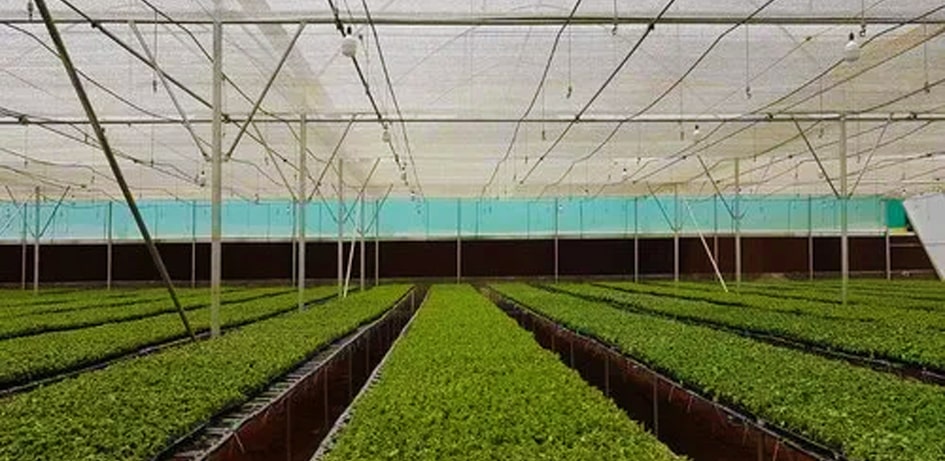
Most successful Indian growers use dome-shaped poly tunnels rather than fully enclosed polyhouses. Blueberries need strong ventilation. A closed polyhouse traps heat and creates the opposite of what the plant wants.
The Soilless Growing System (How It Works)
Since Indian soil is almost never naturally suitable for blueberries, the standard commercial approach uses grow bags filled with a soilless medium.
The standard media mix:
• 50% cocopeat (retains moisture, naturally slightly acidic)
• 50% coco chips (provides aeration and drainage)
• Some growers add 10–15% perlite for extra drainage
Grow bag specs: Typically 15–50 litre bags. Plants are spaced roughly 4 feet between rows and 3 feet between plants.
Key maintenance point: Wash cocopeat and coco chips thoroughly before use to remove excess salts.
The Crop Cycle: What Happens Year by Year
Here's what a typical timeline looks like for zero-chill varieties in Indian conditions:
• Year 0 (Planting Year): Establishment phase. If you're planting 1.5–2 year old tissue-culture plants, you may see a sample harvest within 3–6 months. Don't expect commercial volumes.
• Year 1–2: Plants establish root systems. Yield is modest, roughly 1 kg per plant in early harvests.
• Year 3–4: Production ramps up significantly. Plants begin to mature and fruit more consistently.
• Year 4–8: Peak production. Well-managed plants can yield 3–6 kg per plant annually.
• Year 8–10: Replanting typically needed in substrate systems, as productivity declines.
Seasonal cycle: February: Bud break • March: Flowering • April–May: Fruiting • June–July: Harvesting. Berries ripen about 45–60 days after flowering.
What Blueberry Farming in India Actually Costs
Let's be honest about the money. The numbers vary widely depending on whether you go open-field or protected, and what quality of infrastructure you choose.
• Open-field substrate system: ₹4–5.5 lakhs per acre (basic setup). At the low end, using ₹200–500 plants, basic grow bags, drip irrigation, and weed mat.
• Protected cultivation with tunnels: ₹45–75 lakhs per acre. Once you add poly tunnel structures, fogger systems, shade nets, and premium planting material (₹1,000–1,500 per plant), total investment climbs sharply.
Biggest cost components:
• Planting material: ₹200–1,500 per plant depending on variety, age, and source
• Protected structure: ₹25–30 lakhs per acre for the structure alone
• Substrate and grow bags: ₹3–5 lakhs per acre
• Drip irrigation and fertigation setup: ₹2–4 lakhs
Annual operational costs: Labour, fertilisers, pest management, water, and electricity typically run ₹3–5 lakhs per acre per year.
Revenue and Profitability: Realistic Numbers
Current market prices:
• Wholesale: ₹800–1,200 per kg
• Retail: ₹1,500–2,000 per kg at modern retail and online platforms
• Fresh imported blueberries in Delhi: ₹1,200–1,600 per kg
Revenue projection per acre (Year 4+ at mature production):
• Conservative: 2,500 kg × ₹800/kg = ₹20 lakhs
• Moderate: 3,000 kg × ₹1,000/kg = ₹30 lakhs
• Optimistic: 3,500 kg × ₹1,200/kg = ₹42 lakhs
Net profit (after operational costs of ₹3–5 lakhs): Realistic range ₹15–30 lakhs per acre per year at maturity. Break-even typically takes 3–5 years.
Where Do You Sell Your Blueberries?
This is the question every guide avoids. "Secure your market before planting" is easy to say. Here's what that actually looks like in practice.
The Indian blueberry market currently runs through several distinct channels, each with different margins and requirements:
Modern retail (supermarkets and hypermarkets) Chains like Reliance Fresh, Godrej Nature's Basket, and premium supermarkets in metros are active buyers of domestic blueberries. Nature's Basket in particular positions itself around premium fresh produce and has been open to working with Indian growers. The advantage: consistent volume and predictable payment cycles. The challenge: they require graded, punnet-packed produce (typically 125g clamshells), FSSAI compliance, and the ability to supply reliably over a season. Farm-gate prices in supermarket channels tend to run 20% or more above traditional wholesale.
Online grocery platforms BigBasket works directly with farmers through its Farmer Connect programme and has collection centres near farming regions. Farmers can register as vendors through partner.bigbasket.com. For exotic and premium produce like blueberries, BigBasket also sources through aggregator-vendors. Amazon Fresh and Zepto are other active channels for premium fresh berries in metro cities. These platforms move serious volume and offer real-time price discovery — you can see what domestic berries are listing at versus imported ones on any of these apps right now.
B2B aggregators (Ninjacart and similar) Ninjacart connects farms directly with retailers, restaurants, and hotels across 7 major cities — Bangalore, Chennai, Hyderabad, Ahmedabad, Pune, Mumbai, and Delhi — and moves over 1,400 tonnes of fresh produce daily. For a blueberry farmer near any of these cities, registering with Ninjacart removes the cold-chain and logistics burden: they handle sorting, grading, and delivery within 12 hours of farm pickup. The trade-off is margin. But for a first-time grower without existing buyer relationships, the distribution infrastructure is worth more than the margin loss.
Hotels, restaurants, and cafes (HORECA) Five-star hotels, bakeries, and specialty cafes in metros are high-value buyers who are less price-sensitive than retail. A single large hotel can absorb 10–20 kg per week during blueberry season. The relationship has to be built directly — typically through cold calls, WhatsApp samples, and a few trial deliveries. Payment cycles can be slow (30–60 days), so factor that into cash flow planning.
Direct-to-consumer Some farms near cities have experimented with WhatsApp-based community selling, Instagram marketing, and U-Pick (visit-the-farm) models. This captures the highest margin but requires the most effort and only works at small scale or with strong urban proximity.
Export Blueberry export from India is nascent. GlobalGAP certification is typically required by EU and UK buyers, and competing against Peru or Chile on price is very difficult for small Indian farms. Realistically, export is a long-term opportunity for large organised farms, not a starting point for beginners.
The honest picture on margins: Moving from farm to consumer is where the economics either work or break down. A farmer getting ₹800/kg at the farm gate may see that same berry retail for ₹2,000/kg in a Mumbai supermarket. Building even one or two direct buyer relationships — a hotel, a specialty store, a regular BigBasket supply arrangement — can meaningfully shift your realised price per kg.
Cold Chain and Post-Harvest: The Part Nobody Plans For
Fresh blueberries have a shelf life of roughly 7–14 days at 0–2°C with high humidity (90–95% RH). At room temperature in Indian summer conditions, that drops to 2–3 days. Without cold chain, the crop is essentially worthless by the time it reaches a city buyer.
Yet cold chain is the piece most first-time growers either ignore or dramatically underestimate.
What you actually need:
The minimum viable setup for a small commercial farm (0.5–2 acres) is a basic walk-in cold room capable of holding 1–3 tonnes at 0–4°C. In India, modular cold rooms of this size typically cost ₹3–8 lakhs depending on insulation quality and compressor specs. A 10-tonne solar-powered cold storage unit costs around ₹12–13 lakhs, a portion of which is subsidisable under MIDH and RKVY schemes.
For farms that don't want to invest in on-farm cold storage immediately, a few practical workarounds:
• Rent cold storage space from nearby cold chain operators. Common for first-year growers who don't yet have the volume to justify on-farm investment.
• Direct-to-buyer daily delivery for farms near cities. Some farms near Pune or Bengaluru bypass cold storage entirely by harvesting and delivering same-day to HORECA buyers. This only works within roughly 100–150 km.
• Partner with an FPO that has shared cold chain infrastructure. Government schemes support FPO-level pack houses and cold rooms that individual members can access.
Grading and packing: Blueberries sell in 125g clamshell punnets, typically 12 per tray. Larger berries (18mm+) command premium prices. Mixing sizes or including damaged fruit in a punnet destroys your reputation with repeat buyers.
The bottom line: If you're within 2 hours of a major city and have a direct buyer relationship, you can manage with minimal on-farm cold infrastructure early on. If you're farming in a more remote location or expecting to sell through distributors, budget ₹4–10 lakhs for basic cold room infrastructure as part of your initial project cost — not as an afterthought.
What to Do If Your Water EC Is Too High
Since water quality is the most common hidden dealbreaker, it deserves its own section — because most guides stop at "test your water" without telling you what to do if the test comes back bad.
If your borewell EC is above 0.8 mS/cm, you have four options:
1. Option 1: Find an alternative water source. If your farm has access to a river, canal, or rainwater harvesting system with lower dissolved salts, that's your best-case scenario. Rainwater is naturally very low in EC and is ideal for blueberries. Before abandoning a site, test every available water source.
2. Option 2: Install an agricultural RO (Reverse Osmosis) system. RO systems remove dissolved salts by forcing water through a membrane. A commercial agricultural RO plant capable of treating water for a 1-acre blueberry setup typically starts at ₹1.5–3 lakhs for the equipment, depending on capacity and source water quality. The trade-off: RO systems waste 30–50% of input water as brine, so you need enough water volume to absorb that loss. Operating costs (electricity, membrane replacement) add ₹50,000–1 lakh per year. In regions with very high EC or TDS (above 1,500 ppm), RO is often the only viable fix.
3. Option 3: Blend high-EC water with low-EC water. If you have two water sources — say, a high-EC borewell and a seasonal canal or farm pond — blending them in the right ratio can bring the combined EC within acceptable range. This requires testing both sources and calculating the blend ratio. It's a practical, low-cost workaround where feasible.
4. Option 4: Acid injection into the irrigation line. If your water's EC is acceptable but its pH is too high (alkaline water is common in limestone-heavy regions), continuous acid injection can lower pH to the range blueberries prefer. Phosphoric acid or sulphuric acid is injected via a dosing pump into the drip line. This addresses pH but does NOT reduce salt load — if EC is the problem, acid injection alone won't solve it.
The honest verdict: If your only water source has EC consistently above 1.5 mS/cm and you cannot access an alternative, the farm is not viable for blueberries without significant RO infrastructure investment. Factor this into your site feasibility before anything else.
The Biggest Mistakes Beginners Make
1. Not testing water first. People buy plants, set up infrastructure, and then discover their borewell water has EC of 1.5+ mS/cm. This is the single most expensive mistake.
2. Buying cheap plants from unverified sources. Always buy tissue-culture plants from established nurseries with a track record.
3. Underestimating the technical skill required. The fertigation needs are specific, the pH tolerance window is narrow, and pruning technique directly impacts yield.
4. No market plan before planting. Fresh blueberries are perishable with a shelf life of 7–14 days under cold storage. Know who will buy your berries before you plant them.
5. Ignoring ventilation in protected structures. A fully sealed polyhouse can cook your blueberry plants. Tunnels with adequate cross-ventilation are far better suited.
6. Treating cold chain as optional. Without a plan for keeping berries cold from harvest to buyer, the physical crop is there but the money isn't.
How to Start Blueberry Farming in India: A Step-by-Step Roadmap
1. Test your water and soil. Get your irrigation water tested for EC (must be below 0.8 mS/cm) and pH. If EC is high, evaluate treatment options before proceeding.
2. Visit an existing blueberry farm. Farms in Pune, Kullu, and parts of Karnataka are actively growing blueberries. Agriplast, Neva Plantations, and Sheel Biotech sometimes facilitate farm visits — contact them directly.
3. Select your variety based on your climate. Match your region's temperature profile and chill hours to the right variety category.
4. Plan your infrastructure. Decide between open-field substrate and protected tunnel. Include cold chain in the plan from Day 1, not as an afterthought.
5. Explore subsidies early. Apply through your District Horticulture Officer or online at nhb.gov.in before you start construction.
6. Source plants from accredited nurseries. Use NHB-accredited nurseries or companies with an established track record.
7. Line up your buyers before harvest. Contact modern retail buyers, register on Ninjacart and BigBasket's vendor portal, reach out to local hotels and specialty cafes. Don't wait until you have berries in hand.
8. Start small. Consider 0.5–1 acre before scaling. The learning curve is real.
Frequently Asked Questions
Can I grow a blueberry plant in India?
Yes. With the right variety selection, blueberries grow successfully across multiple Indian states. Zero-chill varieties like Biloxi tolerate temperatures up to 40°C and don't need cold winters.
Can I grow blueberries on my terrace or in pots?
Yes, in principle. Blueberries grow well in containers because they prefer the controlled acidity of a substrate mix. A 20–30 litre pot with a cocopeat-coco chips mix and a zero-chill variety like Biloxi can produce fruit on a terrace. Expect 0.5–1 kg per plant per year in a home setting, not commercial volumes.
How tall is a 2 year old blueberry plant?
A 2-year-old highbush blueberry plant typically stands 60–90 cm (2–3 feet) tall. By year 4–5, mature plants can reach 1.2–1.8 metres depending on variety and pruning.
How many days does it take to grow blueberries?
From flowering to harvest-ready fruit, blueberries take approximately 45–60 days. Commercial-level yields begin from year 2–3, with peak production between years 4–8.
What is the price of blueberry per kg in India?
Wholesale prices range from ₹800–1,200 per kg. Retail prices at modern trade outlets typically fall between ₹1,500–2,000 per kg.
Is blueberry farming profitable in India?
Yes, but only with the right conditions: quality water (EC below 0.8 mS/cm), proper variety selection, soilless growing media, a clear cold chain plan, and reliable market access.
How much profit can blueberry farming give per acre in India?
At mature production (year 4+), realistic net profit ranges from ₹15–30 lakhs per acre per year. Initial investment ranges from ₹5 lakhs to ₹75 lakhs.
Is blueberry farming organic or pesticide-free?
In Indian conditions, pest pressure has been relatively low compared to vegetables. Many farms report minimal spraying. The biggest threat is birds, not insects.
Do blueberries need bees for pollination?
Many varieties are self-fertile, but cross-pollination significantly improves fruit set and berry size. Plant at least two compatible varieties and ensure proper airflow in protected structures.
How long do blueberry plants live and produce fruit?
Biologically, plants can live decades. In Indian pot-based commercial systems, realistic economic life is 8–10 years. Peak production occurs between Year 4–8 under proper management.
The Bottom Line
Blueberry farming in India is not a scam and not a guaranteed goldmine. It's a legitimate, high-value agricultural opportunity with real demand and genuine profit potential — but only for those who approach it with proper technical knowledge, adequate capital, patience for a 3–5 year payback period, and a clear plan for getting berries from bush to buyer.
The opportunity exists precisely because it's difficult. If blueberries grew as easily as tomatoes in Indian conditions, the market would already be flooded and prices would be a fraction of what they are. The difficulty is the moat.
For the right person, in the right location, with the right preparation, it's one of the most interesting agricultural ventures available in India right now.
Sources & References
1. https://www.studyiq.com/articles/blueberry-production-in-india/
2. https://www.volza.com/p/blueberry-fruit/import/import-in-india/
4. https://www.internationalberry.org/2025/04/14/global-fresh-blueberry-outlook-2025-2030/
5. https://dir.tridge.com/prices/fresh-blueberry/IN
6. https://cropscultivation.com/blueberry-farming-profit-per-acre-india/
8. https://nhb.gov.in/Default.aspx
11. https://stories.agronometrics.com/the-volume-of-blueberry-exports-is-still-in-its-early-stages/
12. https://www.tribuneindia.com
13. https://www.rivulis.com/soilless-commercial-blueberry-farming-techniques-and-innovations/
15. https://india.mongabay.com/2025/11/solar-powered-cold-storage-empowers-smallholder-farmers/
16. https://partner.bigbasket.com
18. https://www.sciencedirect.com/science/article/pii/S0305750X20301601
Last updated: April 2026
Note: All figures cited are based on currently available industry data and market reports. Actual costs, yields, and profits will vary based on your specific location, infrastructure, management practices, and market access. Always verify current subsidy guidelines with your state horticulture department before making investment decisions.
Recent Posts
Your Farm. Your Future.
Every great harvest starts with the right conversation. Let our experts design a polyhouse built around your land, crop, and climate.
Talk to an ExpertFrequently Asked Questions
In this video, Abhishek Bhatt, Director of Agriplast Protected Cultivation, will provide a comprehensive breakdown of why Agriplast Polyhouse outperforms other polyhouses in terms of yield. He'll elucidate on key features like superior design, Israeli technology application, and optimal environmental control. The design facilitates enhanced ventilation, ensuring ideal growing conditions. Additionally, the use of Israeli technology, tailored for Indian agricultural needs, plays a crucial role in maximizing yields. Stay tuned to gain valuable insights into how Agriplast Polyhouse revolutionizes protected cultivation for superior agricultural outcomes.
A greenhouse is a transparent structure which is made using glass where plants are grown under certain climatic conditions. The agricultural industry has got many innovations, and the greenhouse technology makes use of modern and smart technology to give optimum facilities to the plants for their better and more efficient growth all around the year. Polyhouse is a kind of greenhouse where polyethene plastic material is used to create the polyhouse instead of the use of glass.
A greenhouse is designed to grow plants even in adverse climatic conditions. The translucent glass that covers the greenhouse gives the plants enough light to let them carry the photosynthesis process easily by absorbing light energy. Since the greenhouse is in an airtight condition, a sufficient amount of sunlight makes the greenhouse warmer from within than the outer atmosphere.
Greenhouse not only warms the greenhouse from within only in summers but in winters; it allows for an artificial heating solution which is effective but is a bit expensive. Some other inexpensive ways of warming up your greenhouse are:
- If you cover the inside of a greenhouse structure with a bubble layer wrap, you will observe a reduction in heat loss.
- Good power supply availability will allow you to add electric fan heaters to circulate hot air within the greenhouse for the plant's growth.
- You can also get electric greenhouse heaters installed that come with an inbuilt thermostat and works automatically when the temperature of the outer surroundings goes down.
Greenhouse benefits you in several different ways, which are listed below:
- Helps in producing fresh crops at any time of the year.
- The facility of producing the crops all around the year, even in adverse climatic conditions.
- The greenhouse allows the farmers to create an exclusive environment for the better plant growth.
- Protects crops from adverse climatic conditions.
- The light energy within a greenhouse is distributed evenly to all the plants.
- Greenhouse installation makes it easy for the farmers to grow crops with less use of pesticides.
- Greenhouse setup helps in saving the total usage of resources.