How Can Polyhouse Farming in India Be Profitable?
Thanks to polyhouse farming, commercial producers in India have access to various opportunities. Before we get too further into this, let us define the term "polyhouse."
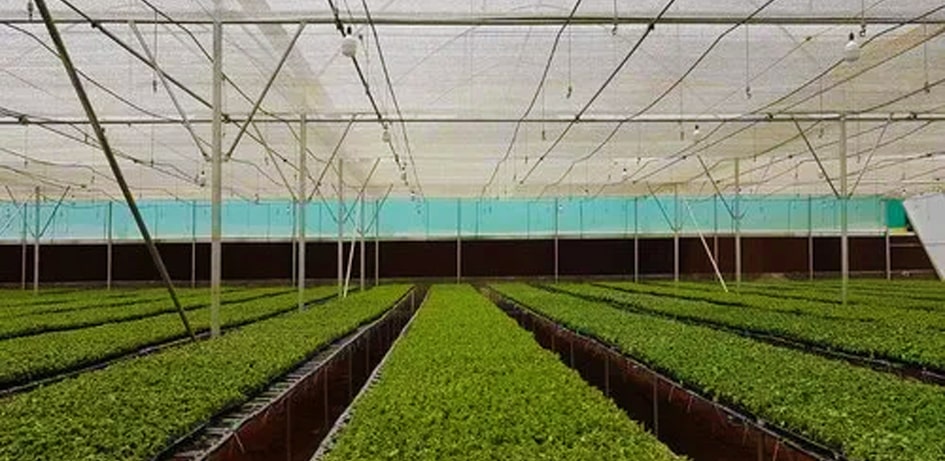
The high-value crops growing below a polyhouse, a covered structure made of metal pipes and angles, are shielded from the elements by polythene. Modern poly homes have state-of-the-art climate management technologies to maintain a comfortable inside.
Today, we'll discuss the extent of a polyhouse making company in India, its advantages or benefits, associated costs, subsidies provided by the government there, and its financial viability.
Is Polyhouse Farming Profitable?
Polyhouse farming is a prime example of precision farming because of the efficient use of resources and the superior quality of the harvest. Commercial producers in India use polyhouses
Fruits and vegetables comprise over 92% of the nation's total horticulture production.
Polyhouses are used to produce crops to protect them from harmful outside elements. By examining its benefits, you can see how polyhouse farming is superior to traditional farming.
India's polyhouse farming offers a number of advantages.
High-Quality Product
Consumers prioritize quality while purchasing food. Demand is never an issue if your product is of high quality. Equipment in the polyhouse, a safe structure, continuously tracks the crop's growth and development.
The supply of fertilizers and water is carefully controlled in polyhouse farming. It helps to maintain the industry's high standards of quality.
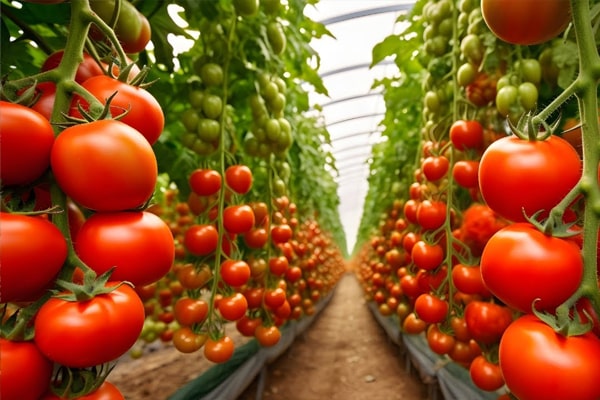
The best examples of crops usually grown vertically inside a polyhouse are indeterminate tomatoes and cucumbers. Crops can be vertically cultivated. According to statistics, tomatoes make up about 12% of all veggies grown in India.
In a polyhouse, vertical crop production boosts yield three to four times while allowing the grower to maximize the available area.
The simplicity of training and plant pruning are additional advantages of growing crops vertically in a polyhouse. Regular pruning encourages the plant to develop more quickly.
Controllable Climate
The temperature inside the polyhouse increases in regions like Punjab, where the average March high temperature surpasses 30 °C. With a controlled atmosphere, farmers can grow plants where agricultural development is impossible.
Equipment in the polyhouse controls variables like humidity, temperature, and air ventilation. A fan-pad system is used to control the temperature within the polyhouse.
Sensory apparatus and a computerized control unit keep tabs on the polyhouses inside the climate. It modifies the fan-pad system to maintain the ideal conditions for crop production.
Facilities for climate control assist growers in the off-season production of vegetable and fruit crops and the year-round production of floricultural crops.
Higher Yield with Significantly Greater Productivity
Polyhouse farming can increase agricultural yields by 10–12 times, depending on the crop variety and crop management.
Numerous biotic and abiotic factors, such as crop type, insect and disease management, nutrient management, and environmental factors, impact crop output.
With polyhouse farming in India, growers may precisely control the fertilizer supply, maintain the appropriate temperature range of 18 to 24 °C, control humidity, and maintain air circulation. They all work together to raise crop yields per acre of land.
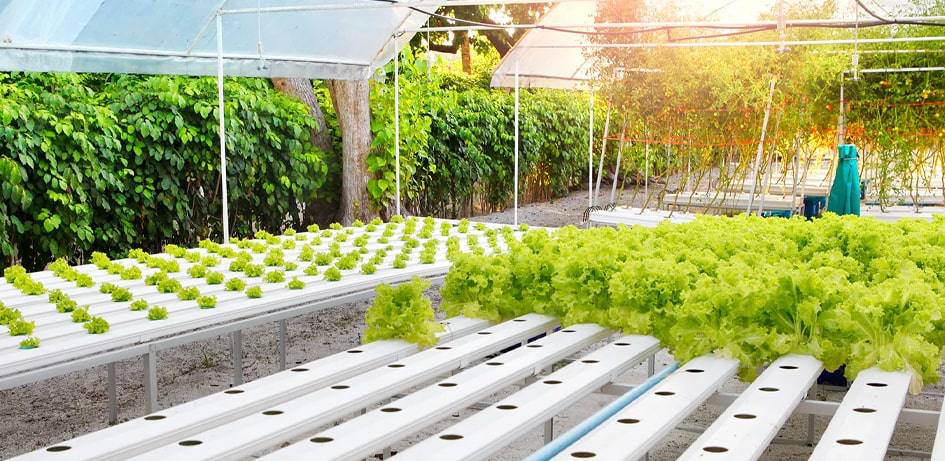
Polyhouses can increase output by utilizing cutting-edge growing techniques like hydroponics and aeroponics. The hydroponics technology reduces water usage by 80–90%.
Grants and Instruction For Polyhouse Farming
Commercial farmers or growers who want to build a polyhouse struggle with two main problems: a lack of capital and insufficient training. The programs of the National Horticultural Board are accessible to farmers.
Under this particular plan, "Development of Commercial Horticulture through Production and Post-harvest Management of Horticulture Crops," with a maximum of Rs 56 Lakh, the beneficiary receives a 50% subsidy for constructing a polyhouse.
Some governments will offer a subsidy of up to 80% if a farmer constructs a playhouse that is 2,000 square meters or larger.
In India, numerous governmental and private organizations support upskilling initiatives for farmers. You can browse our website to learn more about polyhouse making, like the cost of polyhouse farming.
Conclusion
Polyhouse farming has many benefits. It is a more efficient farm, using less water and land. It also allows farmers to control the environment, leading to higher yields. In addition, it can protect crops from pests and diseases and provide a stable source of income.
Agriplast Protected Cultivation is India's Largest Greenhouse Factory, with a total infrastructure area of several acres. The experienced team of professionals possess in-depth knowledge and easily solves any of your farming-related queries. Agriplast Protected Cultivation is a well-known Polyhouse Manufacturer in India that strives to offer the best possible outcomes and workable solutions to help you lead a continuous growth process. Contact us to learn more about polyhouse farming!
Recent Posts
Your Farm. Your Future.
Every great harvest starts with the right conversation. Let our experts design a polyhouse built around your land, crop, and climate.
Talk to an ExpertFrequently Asked Questions
In this video, Abhishek Bhatt, Director of Agriplast Protected Cultivation, will provide a comprehensive breakdown of why Agriplast Polyhouse outperforms other polyhouses in terms of yield. He'll elucidate on key features like superior design, Israeli technology application, and optimal environmental control. The design facilitates enhanced ventilation, ensuring ideal growing conditions. Additionally, the use of Israeli technology, tailored for Indian agricultural needs, plays a crucial role in maximizing yields. Stay tuned to gain valuable insights into how Agriplast Polyhouse revolutionizes protected cultivation for superior agricultural outcomes.
A greenhouse is a transparent structure which is made using glass where plants are grown under certain climatic conditions. The agricultural industry has got many innovations, and the greenhouse technology makes use of modern and smart technology to give optimum facilities to the plants for their better and more efficient growth all around the year. Polyhouse is a kind of greenhouse where polyethene plastic material is used to create the polyhouse instead of the use of glass.
A greenhouse is designed to grow plants even in adverse climatic conditions. The translucent glass that covers the greenhouse gives the plants enough light to let them carry the photosynthesis process easily by absorbing light energy. Since the greenhouse is in an airtight condition, a sufficient amount of sunlight makes the greenhouse warmer from within than the outer atmosphere.
Greenhouse not only warms the greenhouse from within only in summers but in winters; it allows for an artificial heating solution which is effective but is a bit expensive. Some other inexpensive ways of warming up your greenhouse are:
- If you cover the inside of a greenhouse structure with a bubble layer wrap, you will observe a reduction in heat loss.
- Good power supply availability will allow you to add electric fan heaters to circulate hot air within the greenhouse for the plant's growth.
- You can also get electric greenhouse heaters installed that come with an inbuilt thermostat and works automatically when the temperature of the outer surroundings goes down.
Greenhouse benefits you in several different ways, which are listed below:
- Helps in producing fresh crops at any time of the year.
- The facility of producing the crops all around the year, even in adverse climatic conditions.
- The greenhouse allows the farmers to create an exclusive environment for the better plant growth.
- Protects crops from adverse climatic conditions.
- The light energy within a greenhouse is distributed evenly to all the plants.
- Greenhouse installation makes it easy for the farmers to grow crops with less use of pesticides.
- Greenhouse setup helps in saving the total usage of resources.