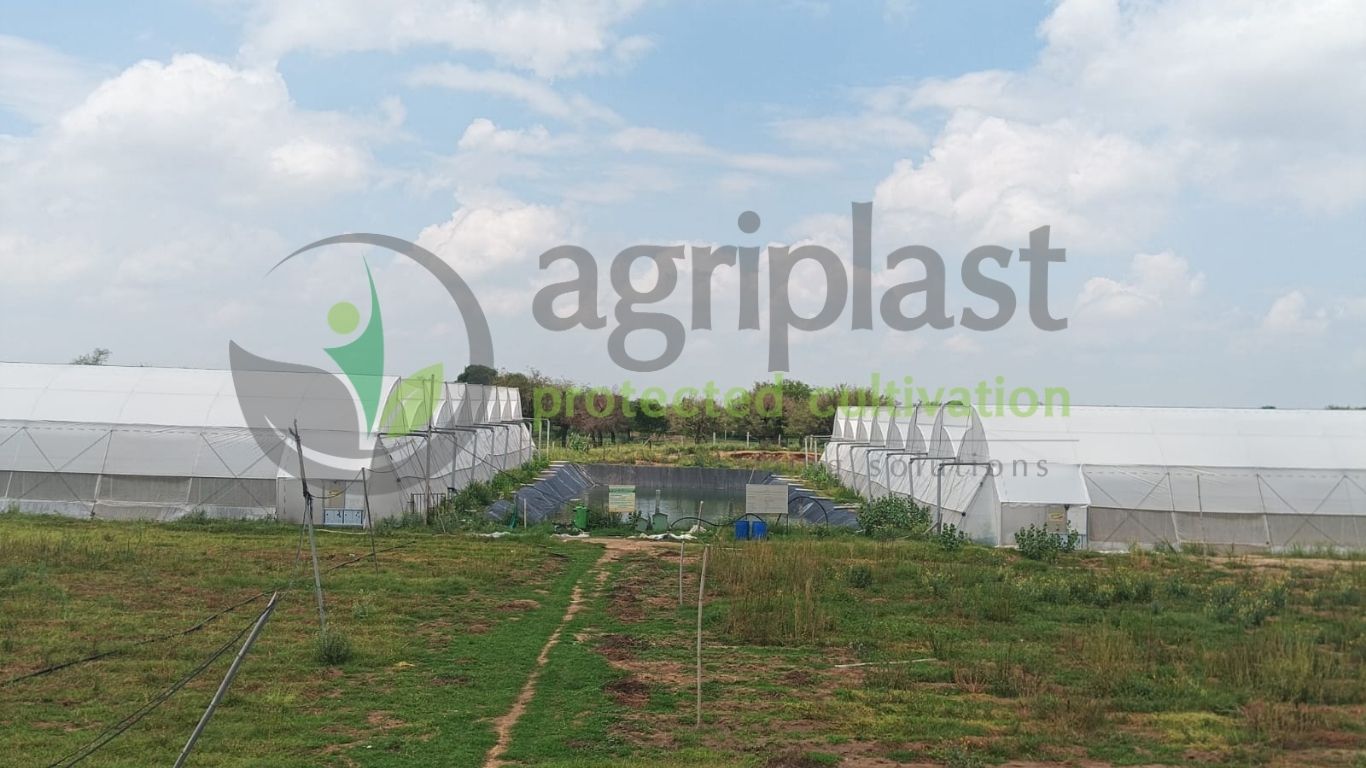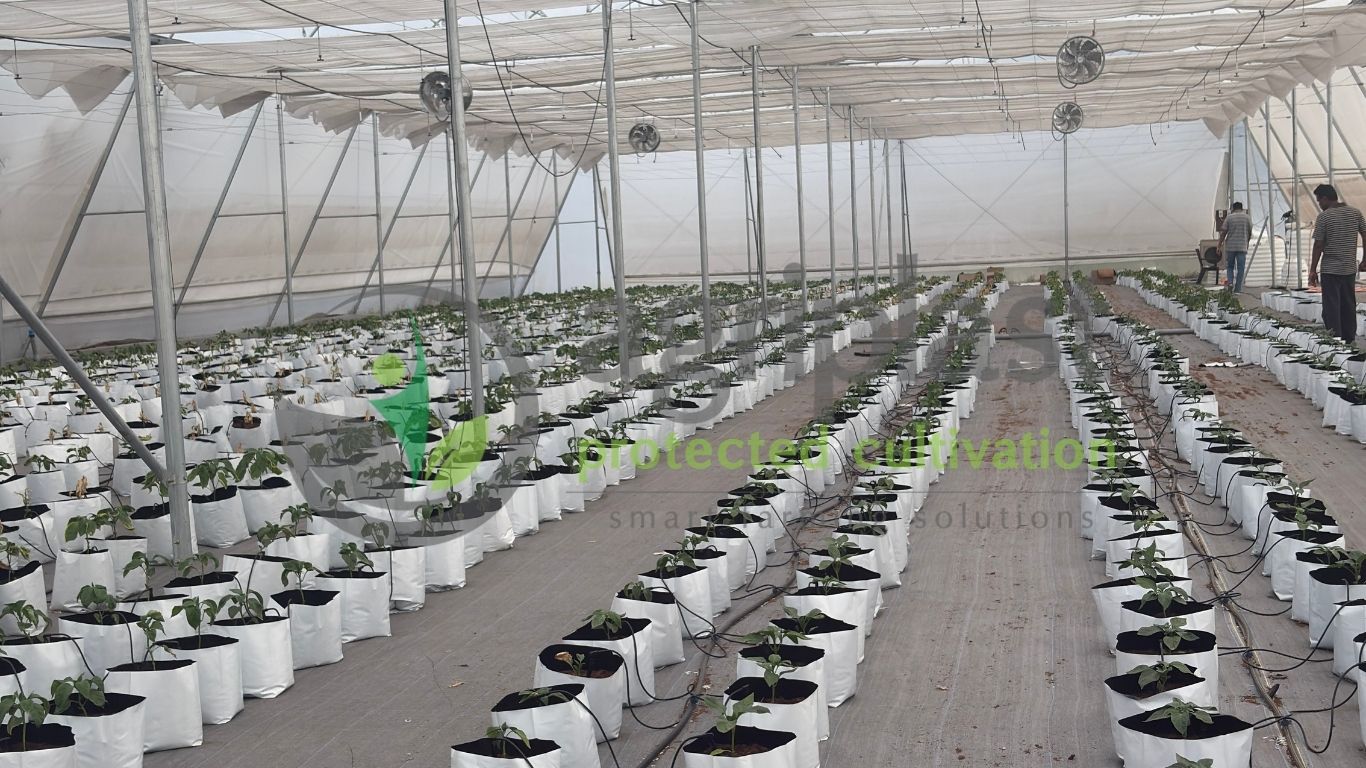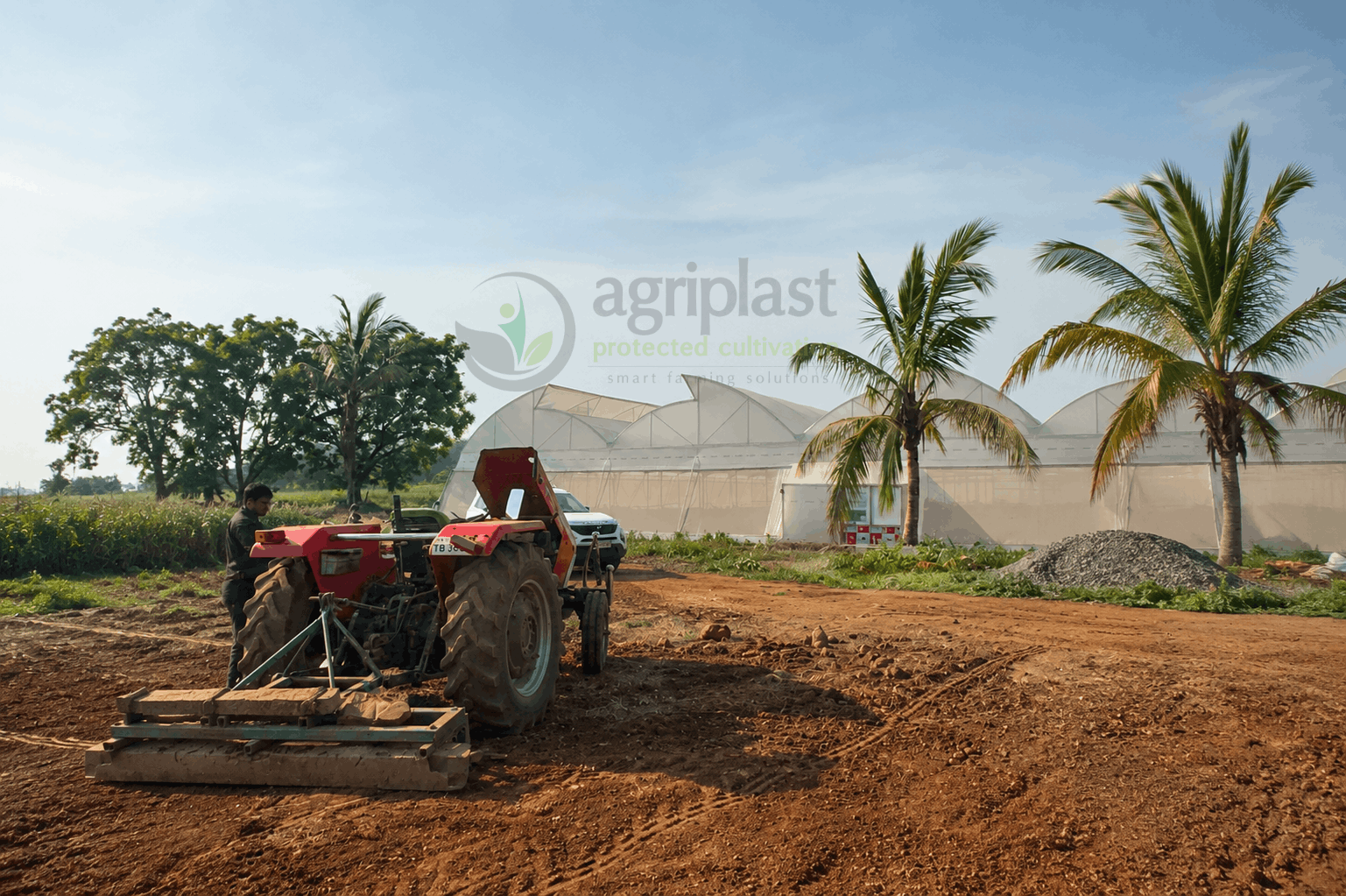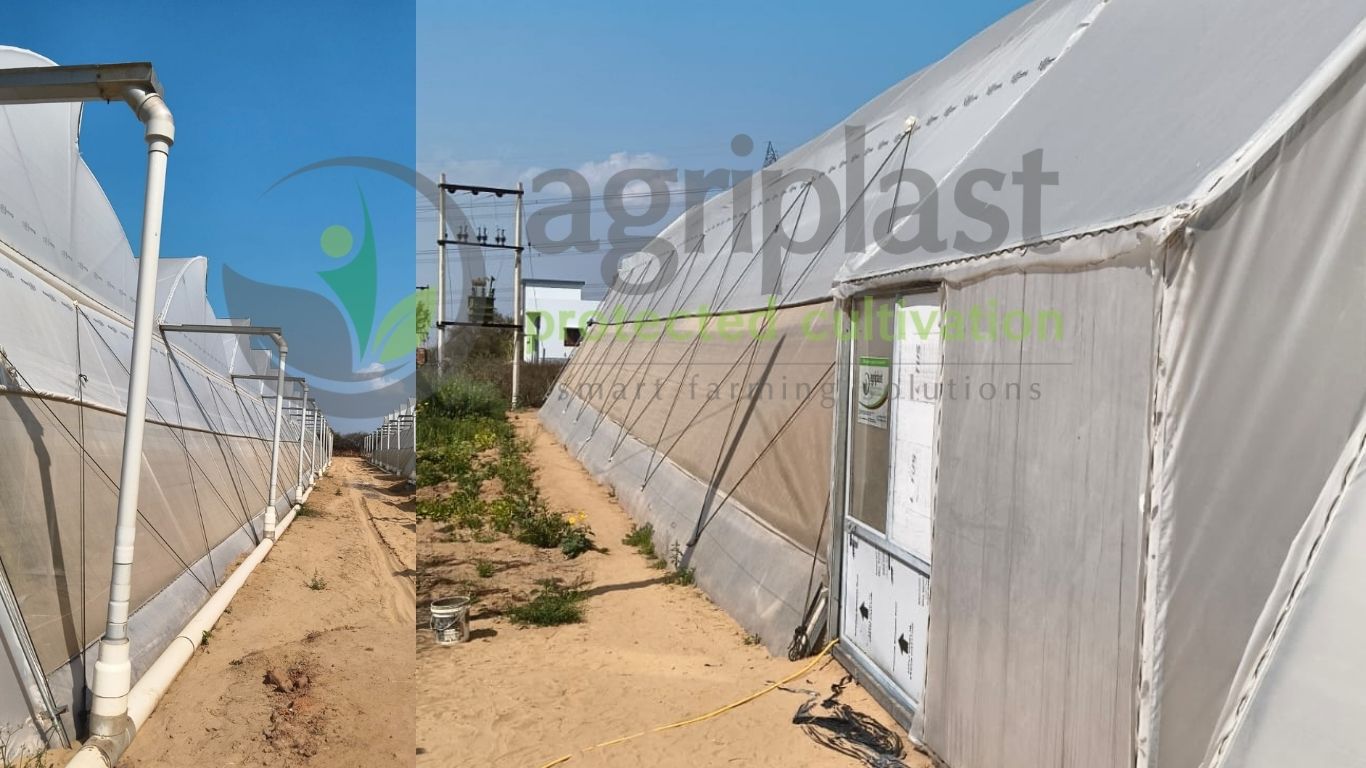
Located in Sikar, Rajasthan, this 8,000 sqm Naturally Ventilated Polyhouse is a soil-based cucumber growing facility with 24,000 plants, built to run a fast-cycle, water-hungry crop through the temperature and moisture extremes of the Shekhawati desert belt.
Sikar sits in north-eastern Rajasthan's Shekhawati region at around 435 metres above sea level, with a subtropical steppe climate that is among the harshest in which cucumber is commercially grown in India. Summers are severe, averaging around 30°C but climbing toward 50°C, while winter nights drop close to and below freezing — Sikar regularly records sub-zero minimums in January. Annual rainfall is only about 452 mm, among the lowest of any of these project locations, and almost all of it falls in July and August, leaving the rest of the year bone-dry with humidity bottoming out around 21% in April.
Cucumber is poorly matched to that on its own, which is exactly why it repays protection. It is a fast-growing vine with a shallow root system, a high and near-continuous water demand, and a preference for moderate-to-high humidity — the opposite of Sikar's parched air. In the open field, the crop transpires heavily just to survive the dry heat, running under constant water stress that turns up as bitterness, poor fruit shape, and weak yield, while consuming irrigation water fast in a district where it is scarce. And because cucumber has no frost tolerance, the cold desert winter shuts the open field entirely for months.
The Structure
An 8,000 sqm Naturally Ventilated Polyhouse was installed to turn a hostile calendar into a workable one. The enclosed canopy holds humidity higher and far steadier than Sikar's desiccating air, which for cucumber is the decisive intervention: it lowers transpiration demand, eases water stress directly, and cuts the irrigation volume the crop needs to stay productive — a genuine efficiency gain in a water-scarce region. Ventilation aligned to the prevailing wind sheds heat through the summer peak while keeping air moving so humidity stays supportive rather than stagnant, and the same envelope shields the vines from the dry, dust-laden winds that abrade exposed plants.
Because cucumber is a short-cycle crop, the structure's real payoff is succession. By buffering the summer heat and, critically, holding the crop above the freezing point through the desert winter, the polyhouse lets the grower run cucumber in back-to-back cycles across most of the year — where the open field manages only brief, weather-dependent windows.
The crop is grown in ground soil, with the polyhouse managing the air, heat, and water environment above it — keeping established local soil agronomy intact while removing the desiccation and temperature extremes a crop this fast and this thirsty cannot absorb on its own.
About Agriplast
Agriplast Protected Cultivation Pvt. Ltd. (APPC) is the largest manufacturer and supplier of polyhouses, net houses, and other greenhouse structures. Agriplast designed, supplied, and installed this Naturally Ventilated Polyhouse in Sikar, Rajasthan. Beyond the structure itself, the company provides end-to-end turnkey delivery alongside agronomy support, crop advisory, and government-subsidy guidance, helping growers move to protected cultivation and grow higher-value crops with more efficient use of land, water, and inputs.
Interested in a Similar Project?
Talk to our greenhouse experts and get a custom quote for your farm.
WhatsApp Us Send Enquiry