Ventilation Systems for Greenhouses in India
Ventilation Systems for Greenhouses in India: Types, Design, and Why They Matter
Ventilation is one of the most critical components of greenhouse cultivation. In Indian conditions - characterized by high solar radiation, long summers, and diverse agro-climatic zones - effective ventilation determines the success or failure of a greenhouse enterprise. Whether the structure is naturally ventilated or fully climate-controlled, ventilation directly affects temperature regulation, humidity balance, carbon dioxide availability, and overall crop performance.
A greenhouse traps solar energy to create a favourable microclimate. However, without timely and adequate air exchange, this trapped heat can quickly push temperatures beyond crop tolerance levels. Proper ventilation ensures removal of excess heat and moisture, replenishment of fresh air, and creation of a stable growing environment at crop level.
Importance of Ventilation in Indian Greenhouses
Indian greenhouses face unique climatic challenges. During most months of the year, especially in tropical, arid, and semi-arid regions, daytime temperatures can rise sharply. Inside a greenhouse, temperatures may increase 8–15°C above ambient levels if ventilation is inadequate. This results in flower drop, poor fruit set, physiological disorders, leaf scorching, and reduced photosynthesis.
Humidity management is equally important. High relative humidity, common during monsoon seasons and in coastal regions, promotes fungal diseases such as powdery mildew, downy mildew, and botrytis. Proper ventilation removes moisture-laden air and keeps relative humidity within acceptable limits, reducing disease pressure and dependence on chemical sprays.
Ventilation also plays a vital role in maintaining carbon dioxide (CO?) concentration. In enclosed greenhouses, CO? levels can drop rapidly during daylight hours due to active photosynthesis. Continuous air exchange restores CO? levels, directly supporting plant growth and yield.
Types of Ventilation Systems Used in Greenhouses
Natural (Passive) Ventilation Systems
Natural ventilation relies on wind pressure and temperature differences to drive airflow through the greenhouse. This is achieved using roof vents, ridge vents, side vents, or roll-up side curtains. Warm air inside the greenhouse rises and escapes through roof openings, while cooler outside air enters through side vents.
In India, naturally ventilated greenhouses are widely adopted due to lower construction and operating costs. These structures are typically taller, with large vent openings fitted with insect-proof nets. When designed correctly and oriented along prevailing wind direction, natural ventilation can effectively reduce heat load during moderate climatic conditions.
However, natural ventilation is dependent on external weather conditions. During calm periods or extreme summer heat, airflow may be insufficient. Control over humidity and temperature is limited, making this system less suitable for high-value or climate-sensitive crops in harsh regions.
Mechanical (Forced) Ventilation Systems
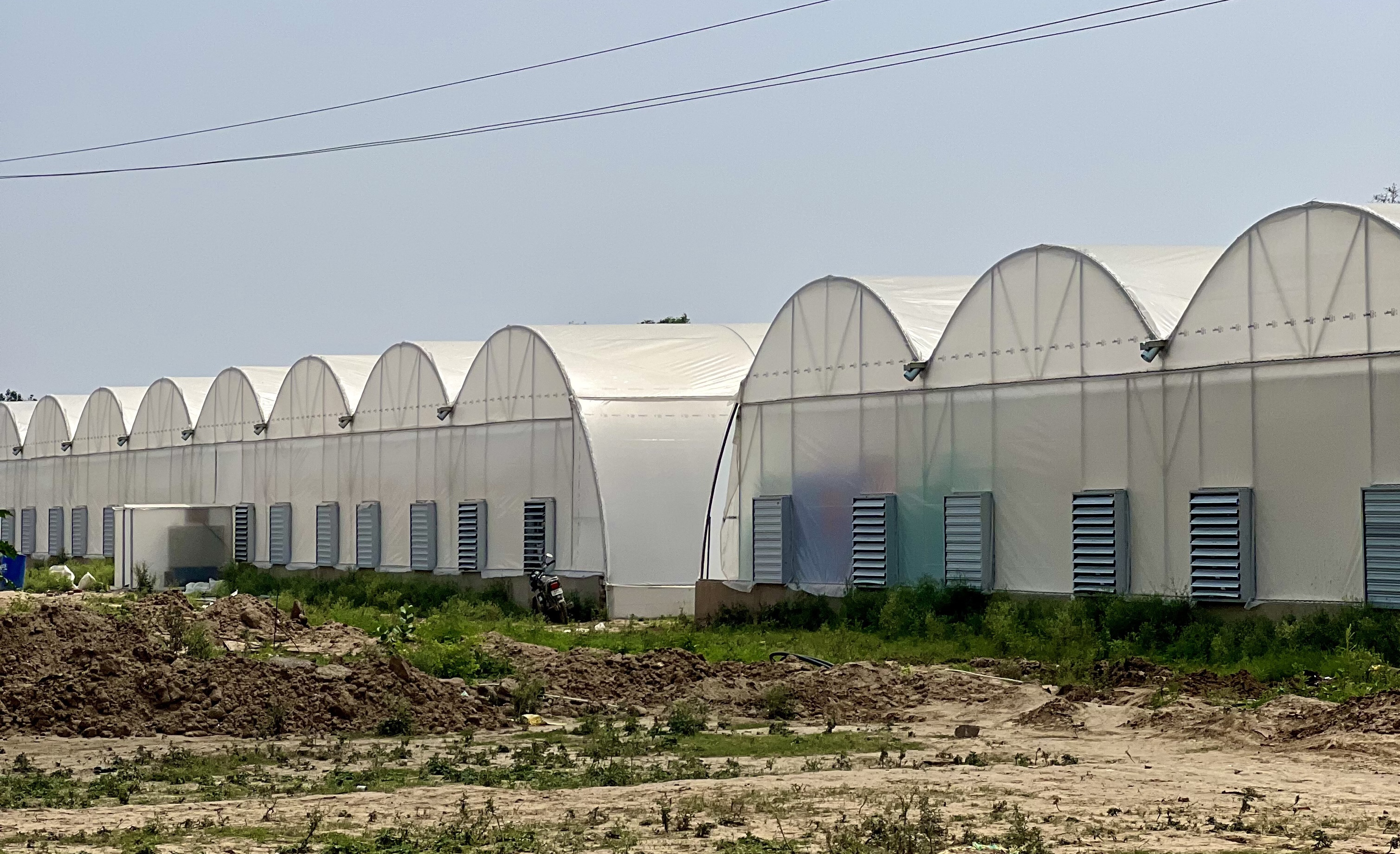
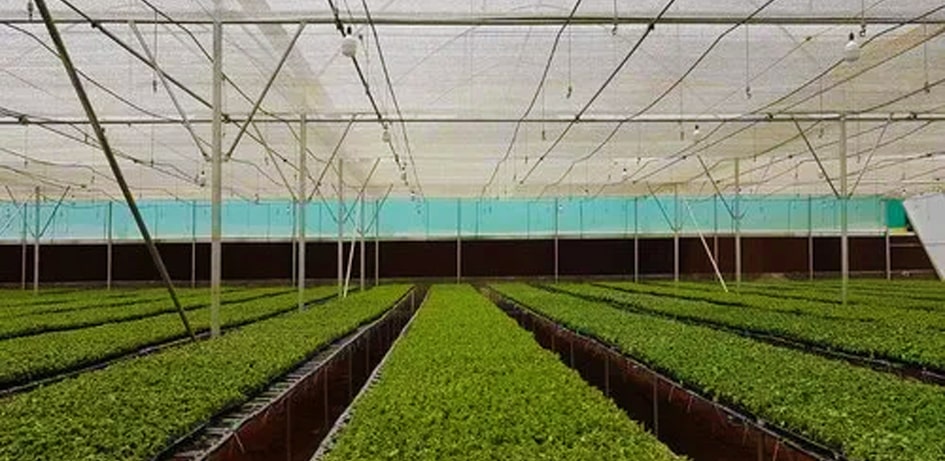
Mechanical ventilation systems actively remove hot air using exhaust fans. These systems are often combined with evaporative cooling pads to enhance cooling efficiency. In a fan-and-pad system, cooling pads are installed on one side wall while exhaust fans are placed on the opposite wall.
When fans operate, outside air is drawn through the wet cooling pads, where evaporation reduces air temperature before it enters the greenhouse. The cooled air moves uniformly across the structure and exits through the fans, removing heat and excess humidity.
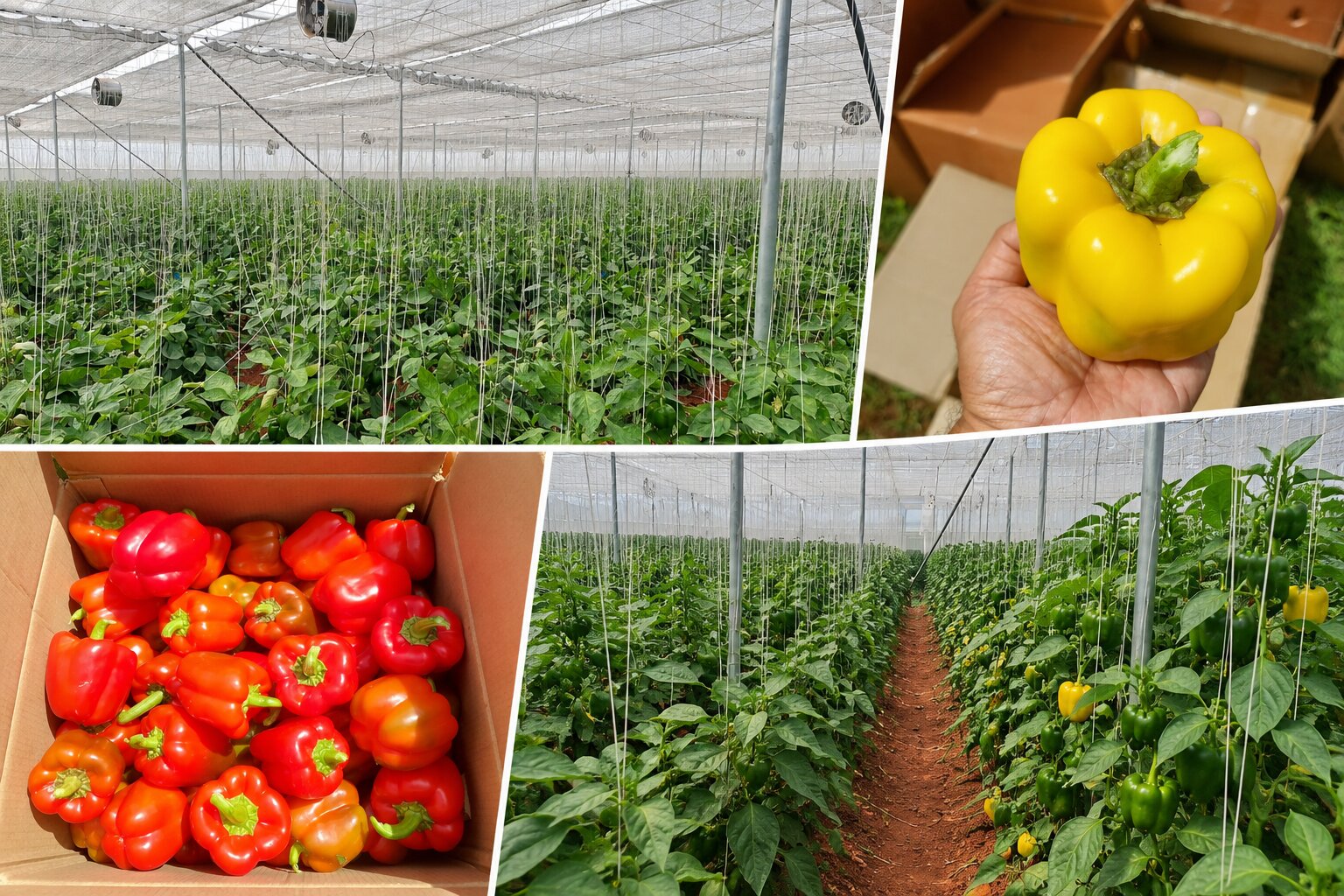
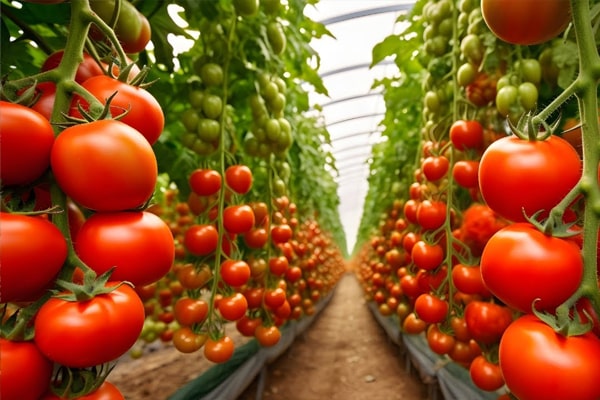
Mechanical ventilation is highly effective in hot and dry regions of India and enables year-round cultivation of crops such as tomato, capsicum, cucumber, strawberry, and flowers. The limitations include higher initial investment, electricity consumption, and regular maintenance requirements.
Hybrid Ventilation Systems
Hybrid systems combine natural and mechanical ventilation. Roof and side vents handle airflow during favourable weather, while exhaust fans and cooling pads operate during peak heat or high humidity.
This approach is commonly used in commercial greenhouses across India, offering a balance between energy efficiency and reliable climate control. Hybrid systems provide flexibility and are well suited for medium to large-scale operations.
Factors to Consider When Selecting a Ventilation System
Climatic Conditions
Climate is the most important factor in ventilation design. Hot and dry regions benefit from evaporative cooling systems, while mild or windy regions may perform adequately with natural ventilation. In humid and coastal zones, high air exchange rates are essential to remove excess moisture.
Crop Type and Sensitivity
High-value and climate-sensitive crops such as capsicum, tomato, cucumber, strawberry, and ornamentals require precise control of temperature and humidity. These crops respond better to mechanical or hybrid ventilation systems. Hardy crops may tolerate naturally ventilated environments.
Greenhouse Size and Height
Taller greenhouses allow better heat stratification and improved natural airflow. Larger structures require higher ventilation capacity to ensure uniform climate conditions across the crop canopy.
Budget and Resource Availability
Naturally ventilated greenhouses require lower capital investment and minimal operating costs. Mechanical systems involve higher expenditure and ongoing electricity and water use. Availability of reliable power and good-quality water should be evaluated before selecting active systems.
Production Goals
Growers targeting off-season production, export markets, or premium quality produce benefit more from mechanical or hybrid ventilation due to their ability to maintain stable conditions year-round.
Installation and Maintenance Considerations (Technical Guidelines)
Vent Area and Opening Ratios
For naturally ventilated greenhouses, total vent opening area should be 15–25% of the floor area. Roof vents should account for the majority of this area, as they are more effective in removing hot air.
Fan Capacity and Air Exchange Rate
In mechanically ventilated greenhouses, systems should be designed to achieve one complete air exchange per minute during peak summer conditions. Fans should handle static pressure of 12–15 mm water column and be uniformly spaced to avoid dead zones.
Fan and Pad Placement
Cooling pads should be installed on the windward side, with exhaust fans on the opposite wall. The distance between pads and fans should preferably remain within 30-40 metres for uniform cooling. Cooling pads are typically 100–150 mm thick, made of cross-fluted cellulose.
Electrical and Control Systems
Fans should be protected with proper earthing, overload relays, and circuit breakers. Climate controllers should use staged fan operation and interlocks to prevent fans running without water circulation over cooling pads.
Water Quality and Cooling Pad Management
Cooling pad performance depends on water quality. Water TDS should ideally remain below 1000 ppm, with pH between 6.5 and 7.5. Pads should be flushed regularly, and sump tanks cleaned to prevent sediment buildup. Running fans without water at the end of the day helps dry pads and prevents algae growth.
Airflow Uniformity at Crop Level
Ventilation must ensure uniform airflow at crop canopy height. In large greenhouses, horizontal airflow fans may be used to reduce temperature stratification. Air velocity should generally remain below 0.5 m/s to avoid crop stress.
Preventive Maintenance
Fans should be cleaned and lubricated every 30–45 days. Cooling pads must be inspected weekly during summer and cleaned seasonally. Sensors should be calibrated periodically to ensure accurate climate control.
Why Ventilation Matters to You
Ventilation is not just an engineering feature, it is a productivity driver. Proper ventilation protects crops from heat stress, reduces disease incidence, and ensures efficient photosynthesis by maintaining adequate CO? levels. This leads to healthier plants, higher yields, and superior produce quality.
Effective ventilation also reduces chemical usage, lowers crop losses, and enables off-season cultivation, allowing growers to access premium markets and improve profitability. In a greenhouse, ventilation determines how effectively the environment can be controlled to meet crop requirements.
In summary, investing in the right greenhouse ventilation system and installing and maintaining it correctly, is fundamental to sustainable, profitable protected cultivation in India.
Recent Posts
Your Farm. Your Future.
Every great harvest starts with the right conversation. Let our experts design a polyhouse built around your land, crop, and climate.
Talk to an ExpertFrequently Asked Questions
In this video, Abhishek Bhatt, Director of Agriplast Protected Cultivation, will provide a comprehensive breakdown of why Agriplast Polyhouse outperforms other polyhouses in terms of yield. He'll elucidate on key features like superior design, Israeli technology application, and optimal environmental control. The design facilitates enhanced ventilation, ensuring ideal growing conditions. Additionally, the use of Israeli technology, tailored for Indian agricultural needs, plays a crucial role in maximizing yields. Stay tuned to gain valuable insights into how Agriplast Polyhouse revolutionizes protected cultivation for superior agricultural outcomes.
A greenhouse is a transparent structure which is made using glass where plants are grown under certain climatic conditions. The agricultural industry has got many innovations, and the greenhouse technology makes use of modern and smart technology to give optimum facilities to the plants for their better and more efficient growth all around the year. Polyhouse is a kind of greenhouse where polyethene plastic material is used to create the polyhouse instead of the use of glass.
A greenhouse is designed to grow plants even in adverse climatic conditions. The translucent glass that covers the greenhouse gives the plants enough light to let them carry the photosynthesis process easily by absorbing light energy. Since the greenhouse is in an airtight condition, a sufficient amount of sunlight makes the greenhouse warmer from within than the outer atmosphere.
Greenhouse not only warms the greenhouse from within only in summers but in winters; it allows for an artificial heating solution which is effective but is a bit expensive. Some other inexpensive ways of warming up your greenhouse are:
- If you cover the inside of a greenhouse structure with a bubble layer wrap, you will observe a reduction in heat loss.
- Good power supply availability will allow you to add electric fan heaters to circulate hot air within the greenhouse for the plant's growth.
- You can also get electric greenhouse heaters installed that come with an inbuilt thermostat and works automatically when the temperature of the outer surroundings goes down.
Greenhouse benefits you in several different ways, which are listed below:
- Helps in producing fresh crops at any time of the year.
- The facility of producing the crops all around the year, even in adverse climatic conditions.
- The greenhouse allows the farmers to create an exclusive environment for the better plant growth.
- Protects crops from adverse climatic conditions.
- The light energy within a greenhouse is distributed evenly to all the plants.
- Greenhouse installation makes it easy for the farmers to grow crops with less use of pesticides.
- Greenhouse setup helps in saving the total usage of resources.