Hubli sits in northern Karnataka's semi-arid belt, at an elevation of over 640 metres with a tropical wet-and-dry climate. Summer temperatures regularly touch 37°C, and while the region receives around 900 mm of annual rainfall, most of it is concentrated in June and July - leaving the rest of the year dry and harsh. For bell pepper growers, this pattern is difficult to work around. The crop needs stable temperatures during flowering, and a single unseasonal downpour or a prolonged dry spell can set back an entire season.
Open-field cultivation here means farming at the mercy of a climate that's rarely cooperative.
The Structure
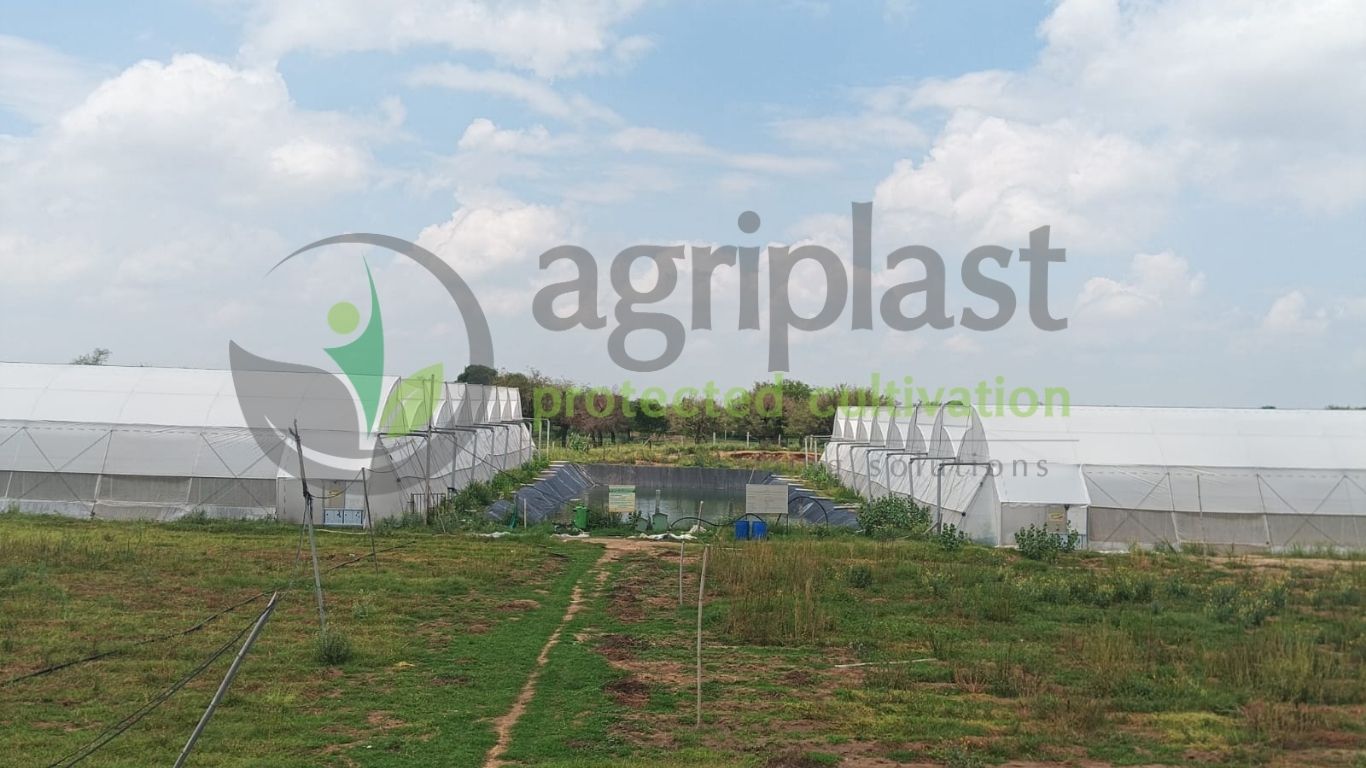
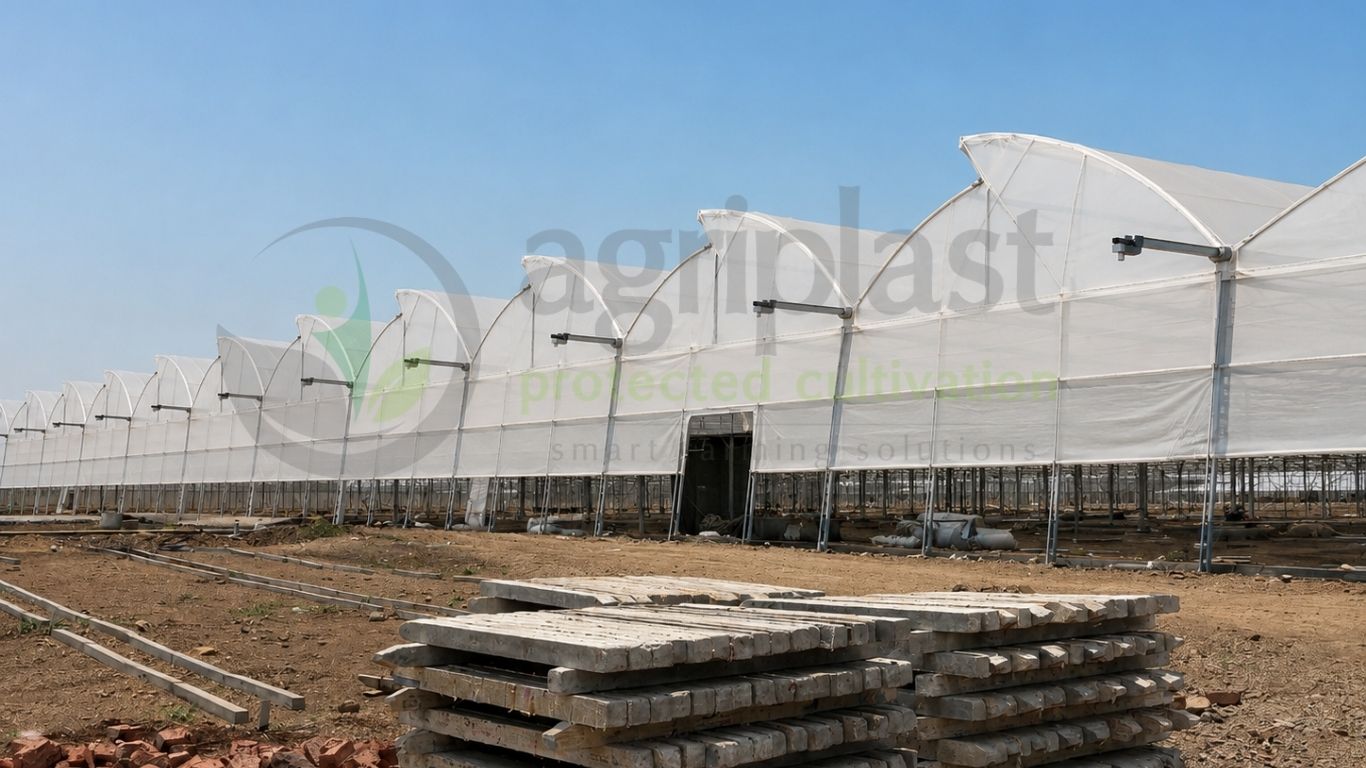
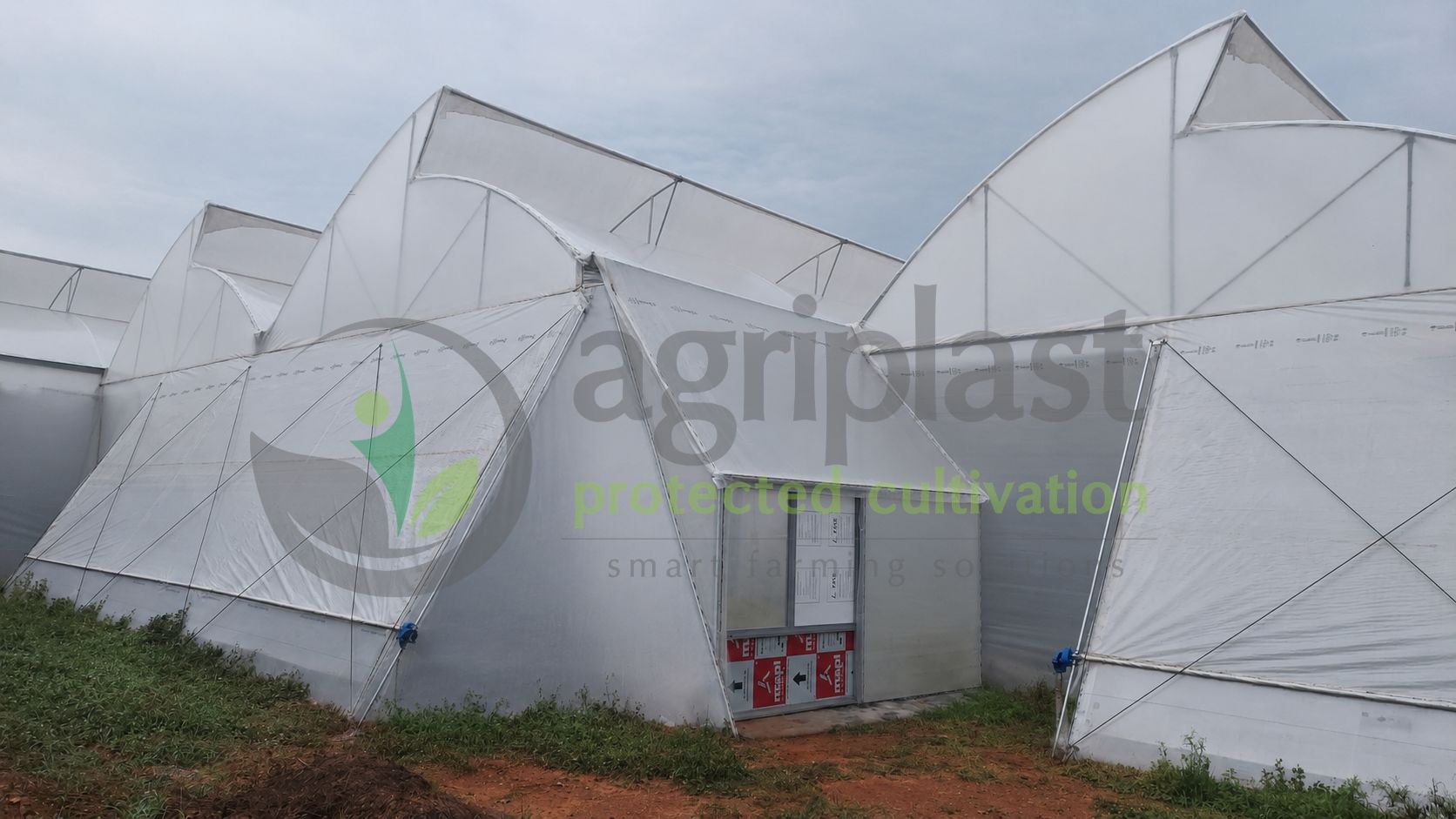
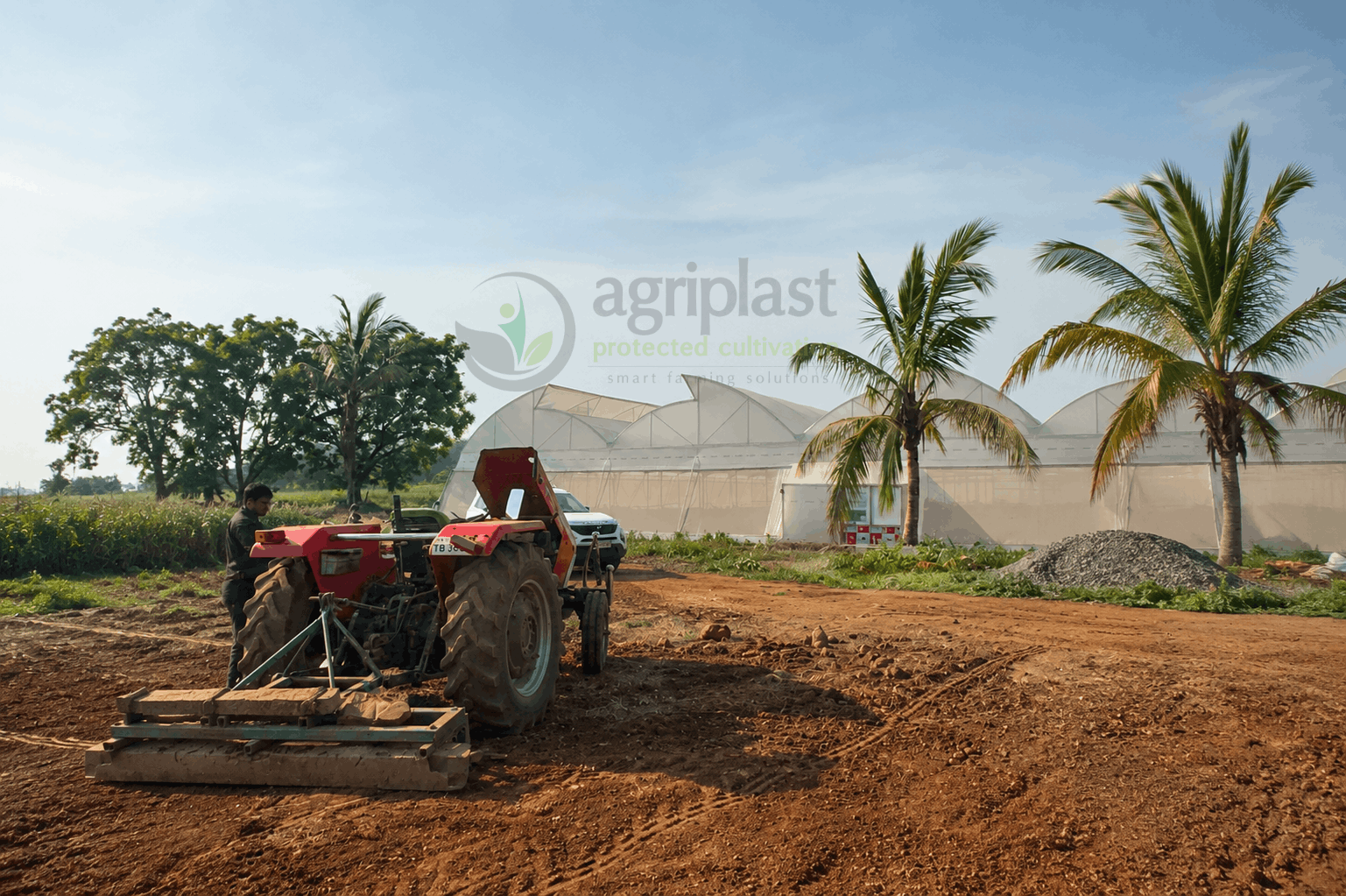
A 4,080 sqm Naturally Ventilated Polyhouse was installed to change that equation. In Hubli's climate, a fan-and-pad system isn't necessary - what the crop needs is protection from direct rainfall, wind buffering, and enough passive cooling to take the edge off peak summer heat. An NVPH structure delivers exactly this, at a fraction of the operating cost of an active climate control setup.
The ventilation layout was aligned to the site's prevailing wind direction, keeping airflow adequate through the hottest months while maintaining a closed, protected environment when it matters most.
The result is a year-round growing environment for bell peppers - stable, manageable, and suited to exactly the kind of climate Hubli presents.
Agriplast Protected Cultivation Pvt. Ltd. (APPC) is the largest manufacturer and supplier of polyhouses, net houses, and other greenhouse structures. Agriplast designed, supplied, and installed this Naturally Ventilated Polyhouse in Hubli, Karnataka. Beyond the structure itself, the company provides end-to-end turnkey delivery alongside agronomy support, crop advisory, and government-subsidy guidance, helping growers move to protected cultivation and grow higher-value crops with more efficient use of land, water, and inputs.
Interested in a Similar Project?
Talk to our greenhouse experts and get a custom quote for your farm.
WhatsApp Us Send Enquiry