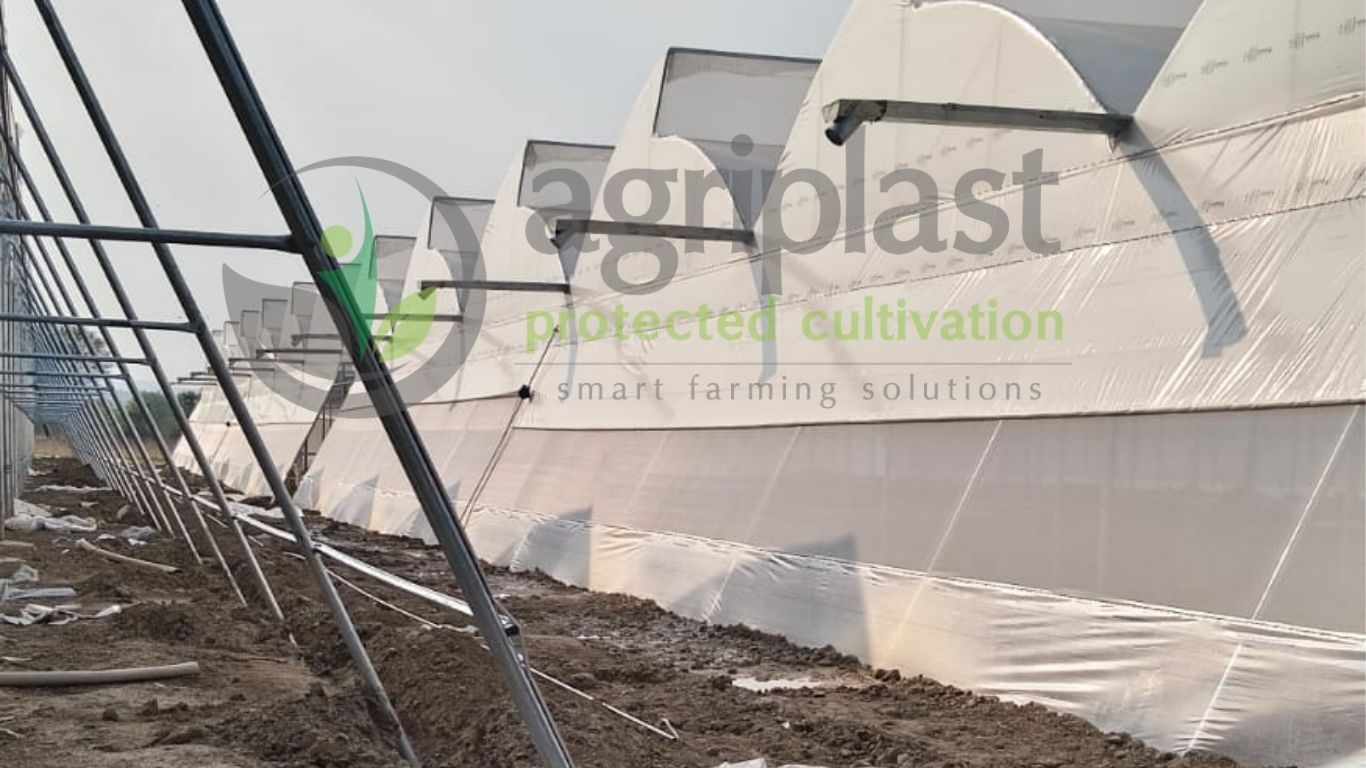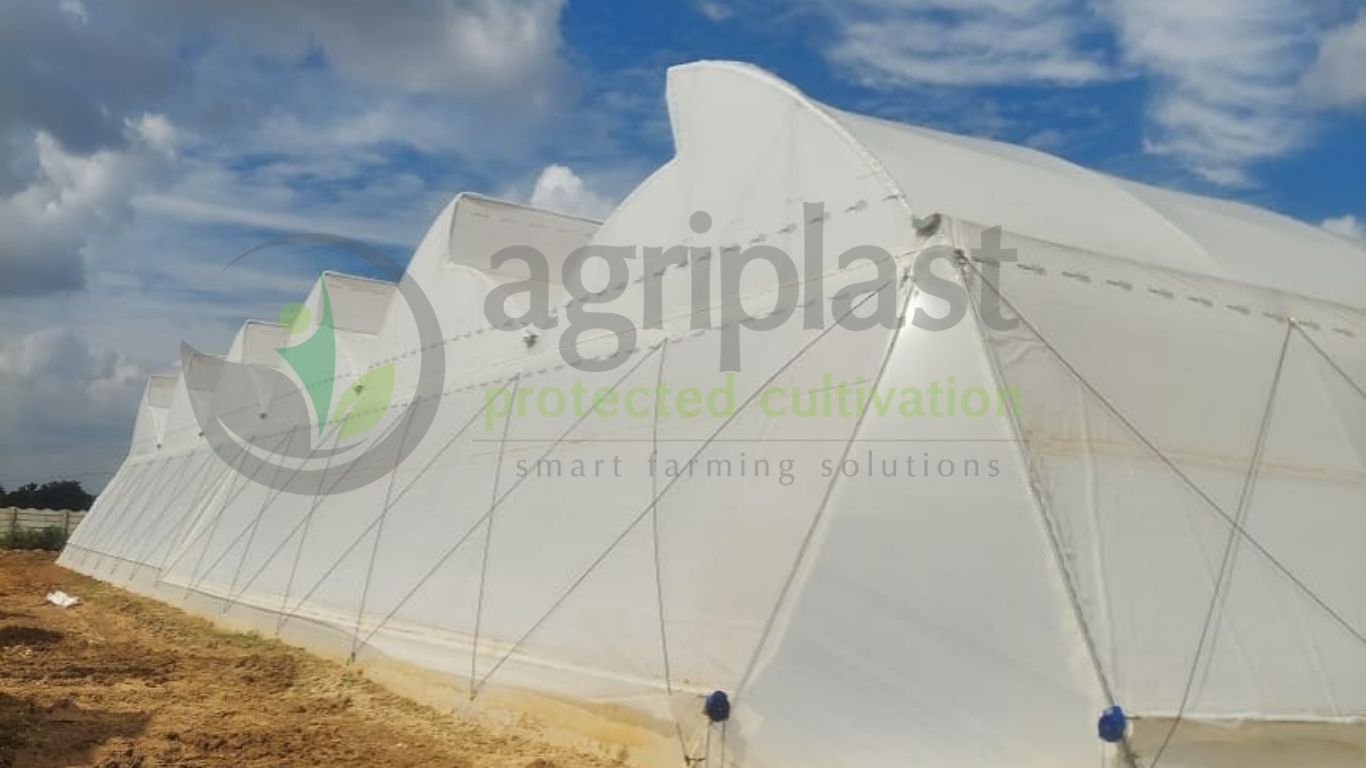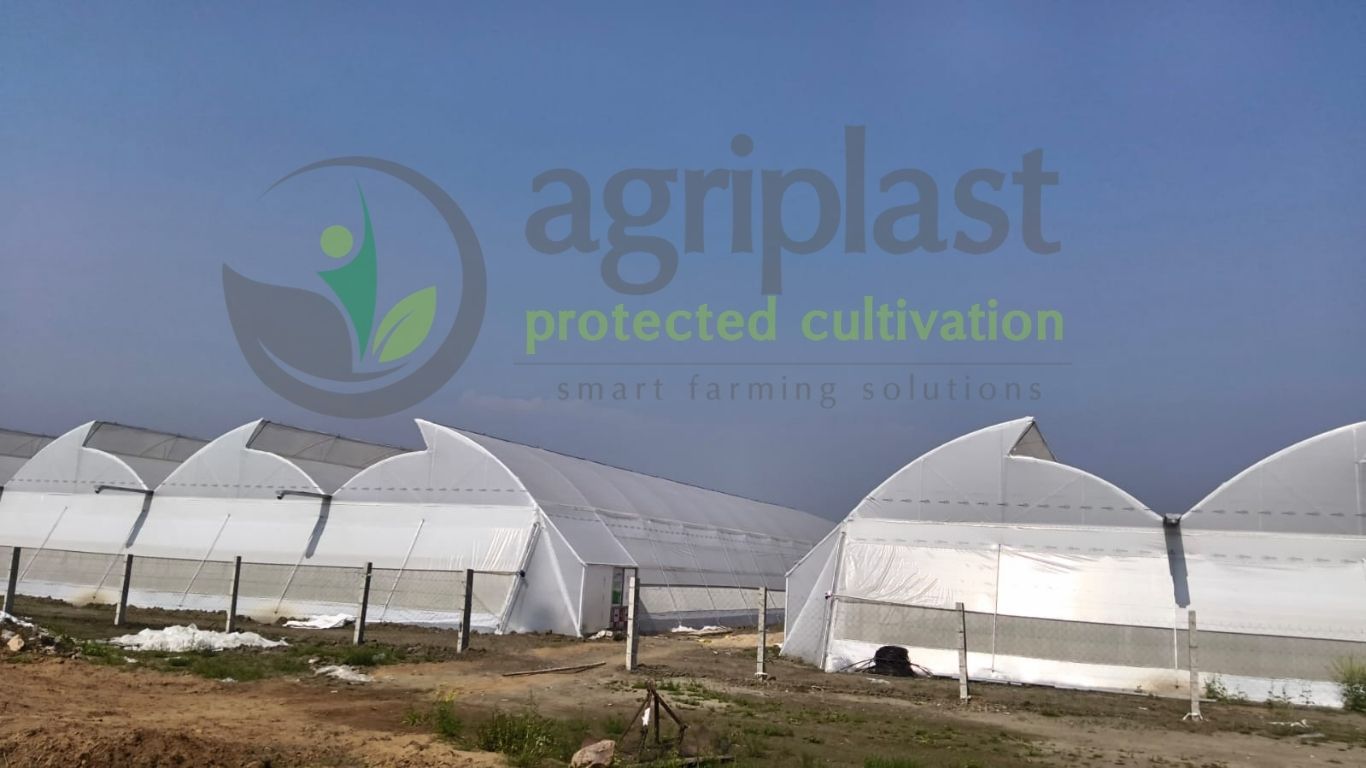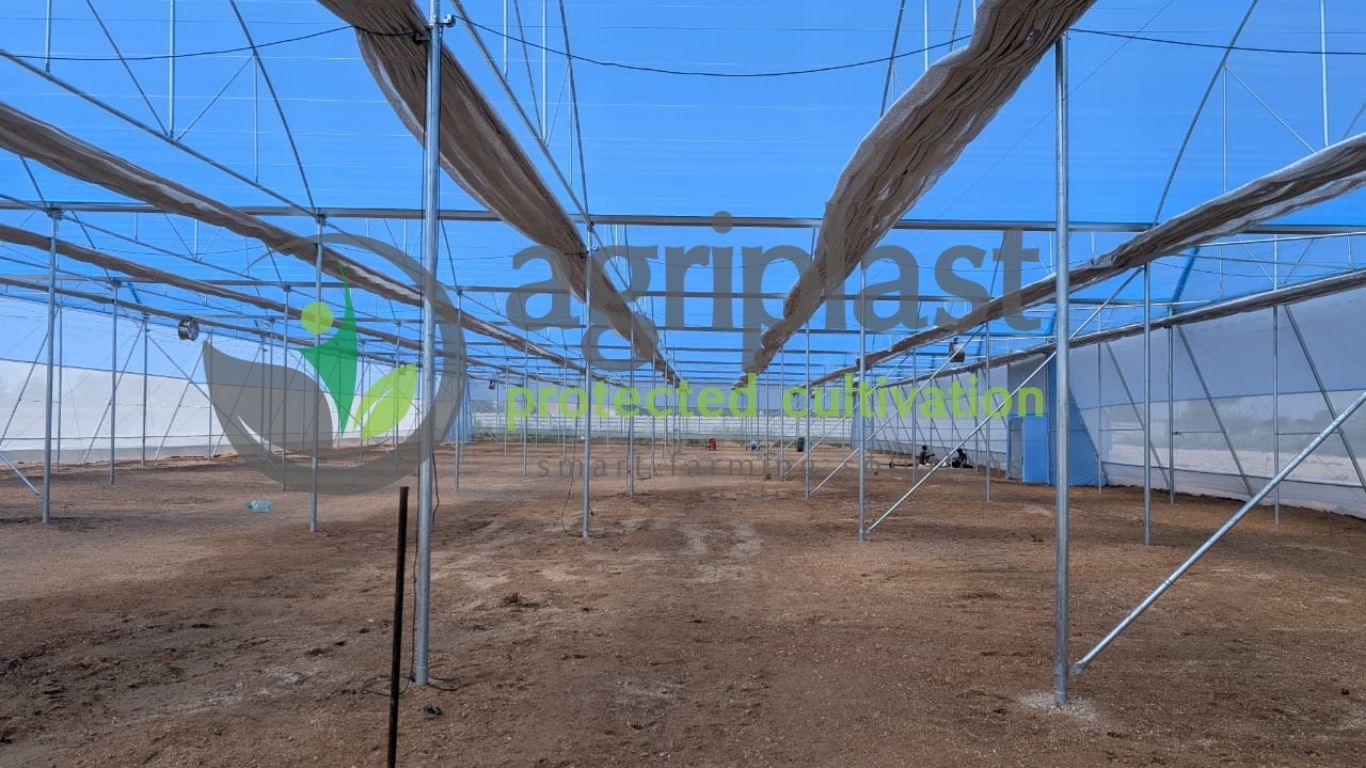
Located in Hyderabad, Telangana, this 2,080 sqm Naturally Ventilated Polyhouse is a soilless facility producing leafy greens and other short-cycle crops — a compact, high-turnover growing operation built for continuous year-round supply into a major urban market.
Hyderabad sits on the Deccan plateau at around 500 metres above sea level, with a tropical wet-and-dry climate that reads as semi-arid for much of the year. The dry season is long, running from November through May, with the monsoon arriving in June and lasting into October. Before the rains, temperatures climb hard — April and May can reach 45°C on the hottest days. Annual rainfall is around 800 mm, but it is sharply concentrated: July alone averages 178 mm, while December sees barely 4 mm. Those monsoon downpours often arrive as short, intense bursts. The city's own urban heat island effect adds to summer temperatures on top of all this.
Leafy greens are the wrong crop for that climate, which is precisely why they're worth protecting. Lettuce, spinach, kale, and the salad crops are cool-season plants on short cycles — they bolt, turn bitter, and lose texture when temperatures run high, which effectively closes the open field for months of a Hyderabad year. And in the monsoon, tender leaves take physical damage from heavy rain and splash-borne soil contamination that no amount of washing fully undoes. The result, grown conventionally, is a crop that is seasonal, inconsistent, and difficult to sell into a market that wants it every week.
The Structure
A 2,080 sqm Naturally Ventilated Polyhouse was installed to make the crop continuous rather than seasonal. For leafy greens, the structure's value is in what it removes: direct sun that scorches and stresses tender foliage, driving rain that tears leaves and splashes soil onto the harvest, and wind. Shade and diffused light hold canopy temperatures below the point where crops bolt during the long hot months, while ventilation aligned to the prevailing wind keeps air flowing steadily through the beds — critical for short-cycle greens, where still, humid air quickly invites downy mildew and leaf rot.
The crop is grown on a soilless system, which suits leafy greens better than almost any other category. Short cycles mean rapid succession planting, and a clean, sterile medium allows bed after bed to be turned over without accumulating soil-borne disease or weed pressure. Nutrition can be tuned precisely to each crop and stage, producing consistent leaf size, colour, and texture across every harvest. And because the leaves never touch soil, the produce comes off the bench clean — a decisive advantage for greens that are sold fresh and eaten raw.
On a compact 2,080 sqm footprint close to a major city, that combination turns a small plot into a year-round supply line for a market that buys greens every day of the year.
About Agriplast
Agriplast Protected Cultivation Pvt. Ltd. (APPC) is the largest manufacturer and supplier of polyhouses, net houses, and other greenhouse structures. Agriplast designed, supplied, and installed this Naturally Ventilated Polyhouse in Hyderabad, Telangana. Beyond the structure itself, the company provides end-to-end turnkey delivery alongside agronomy support, crop advisory, and government-subsidy guidance, helping growers move to protected cultivation and grow higher-value crops with more efficient use of land, water, and inputs.
Interested in a Similar Project?
Talk to our greenhouse experts and get a custom quote for your farm.
WhatsApp Us Send Enquiry