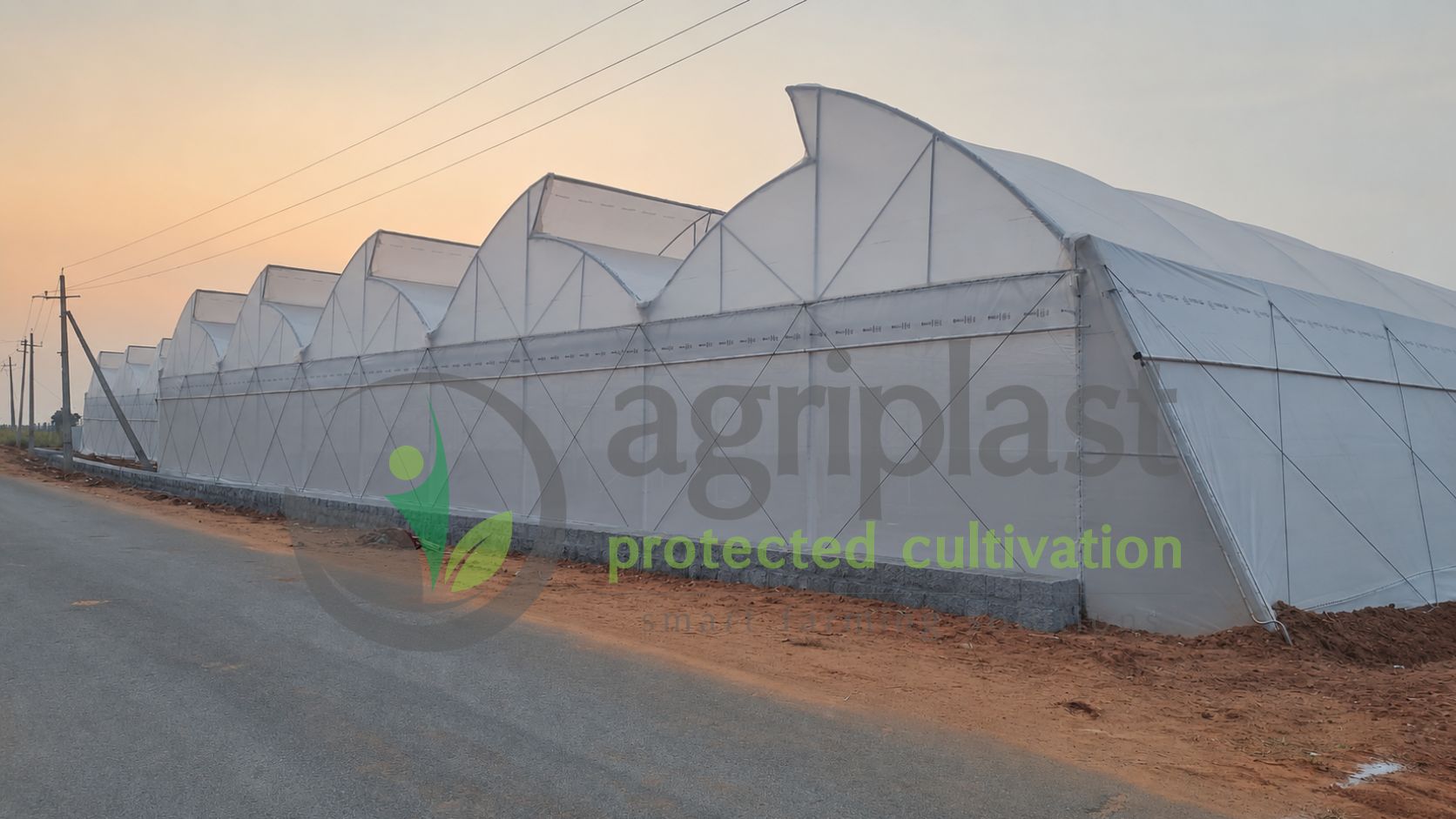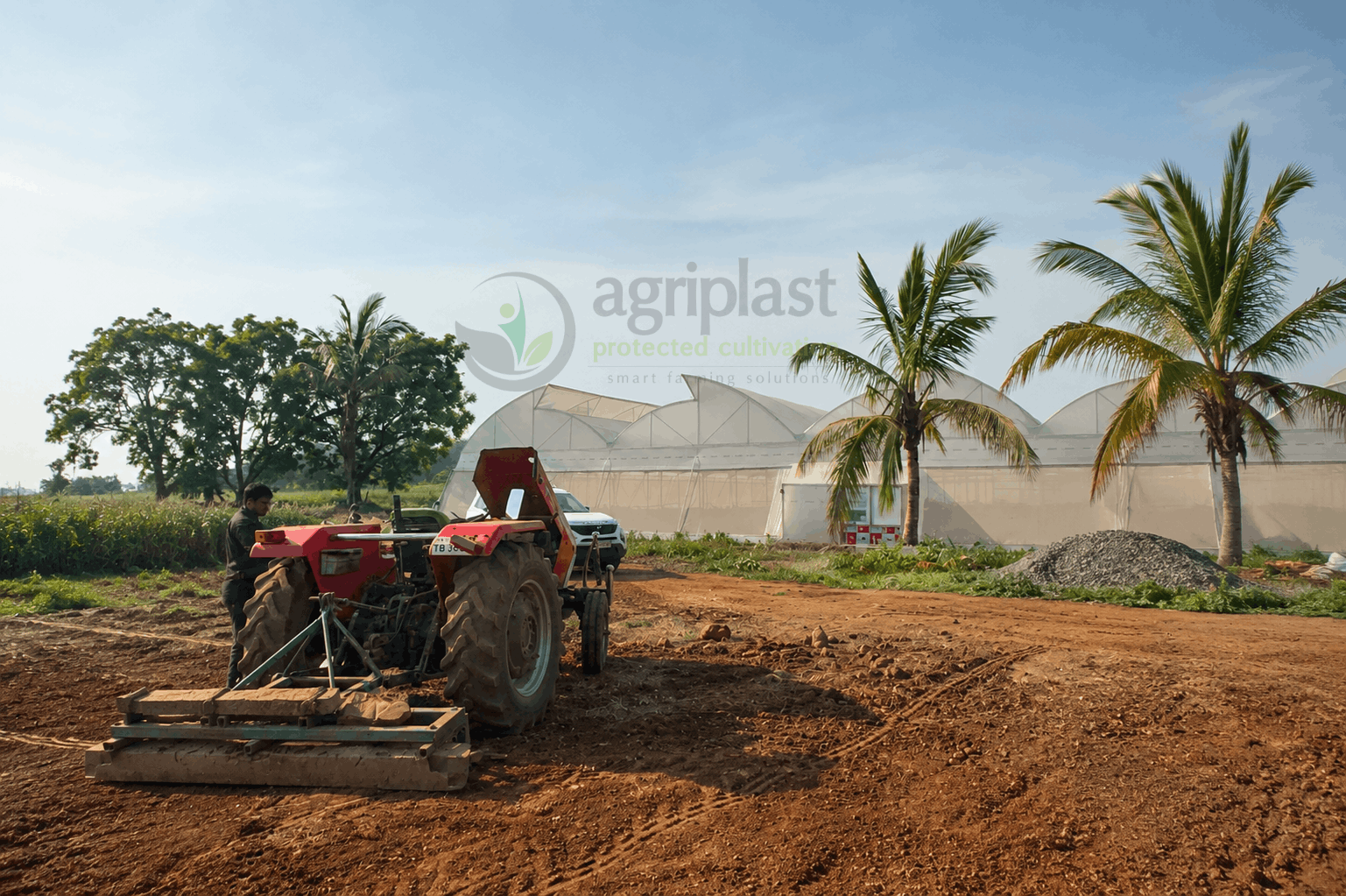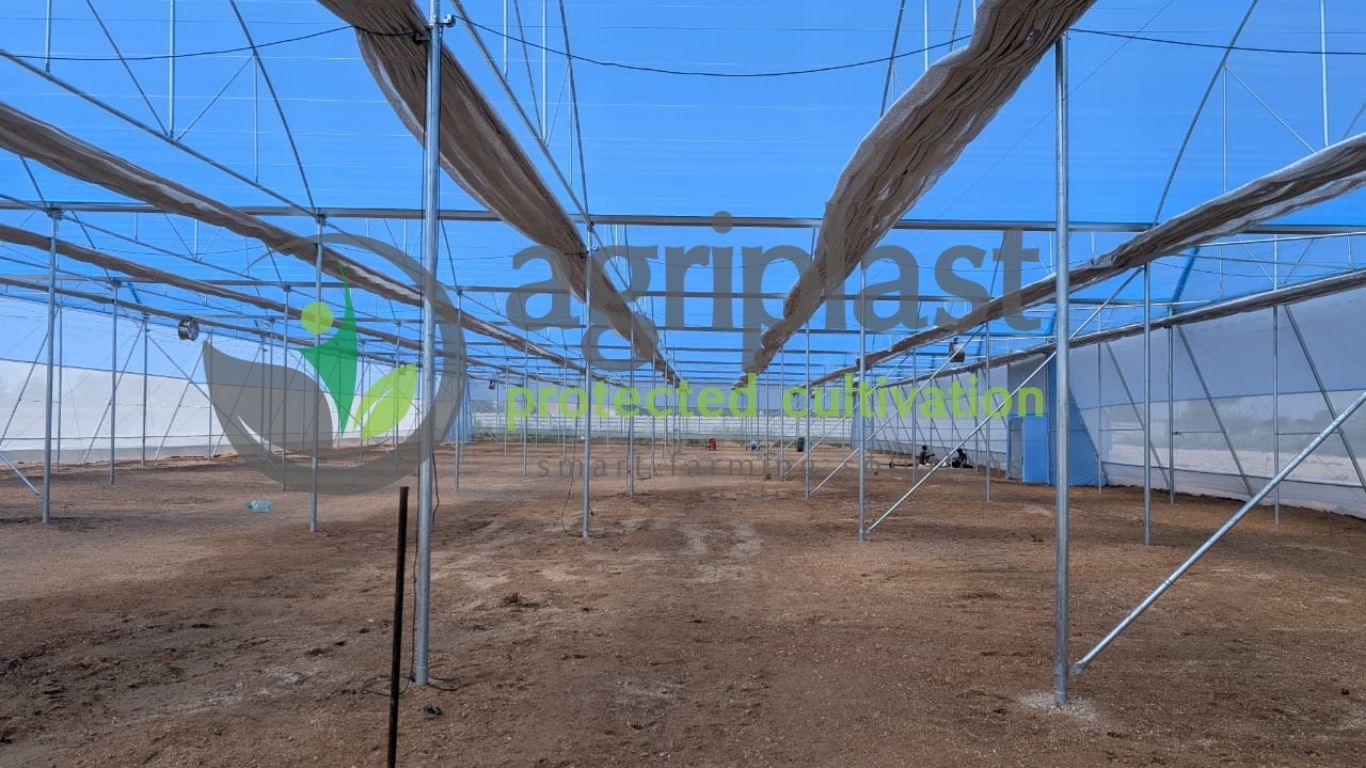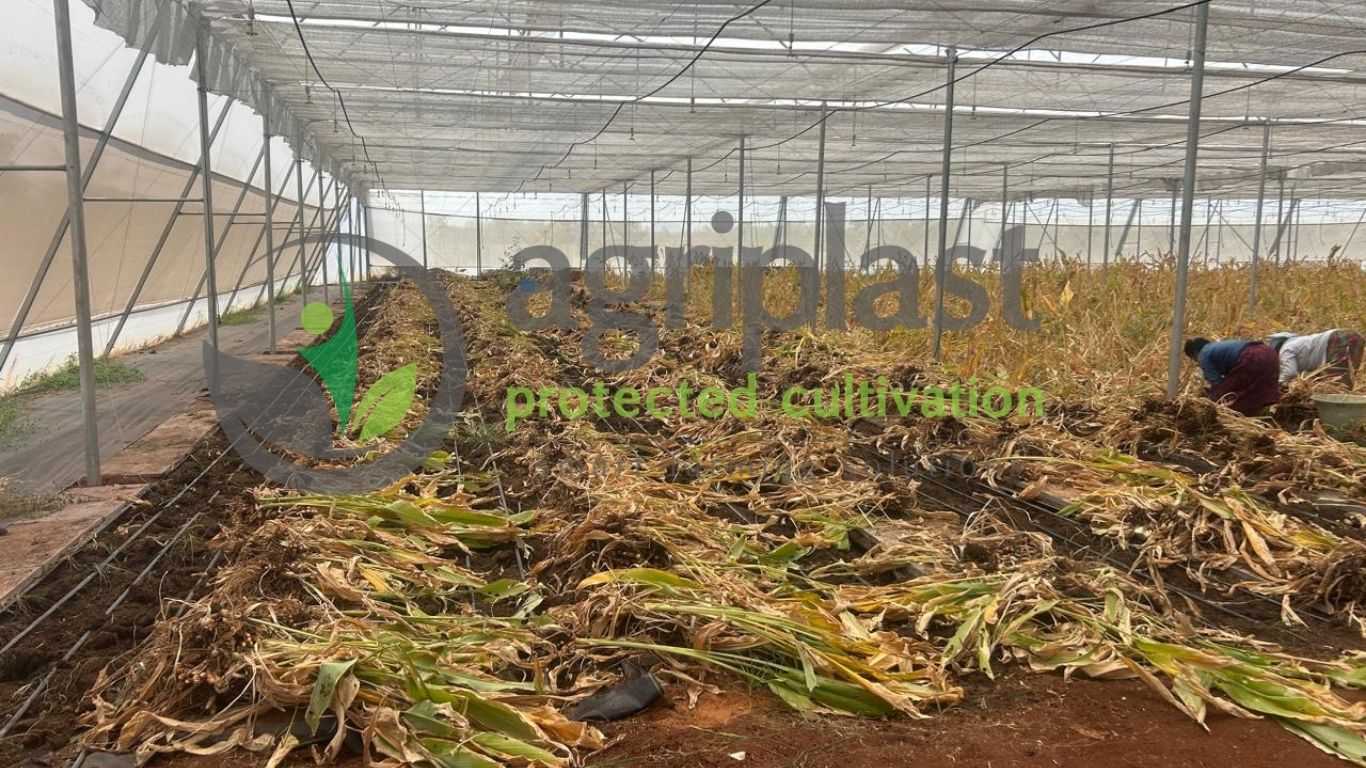
Located in Nellore, Andhra Pradesh, this 4,160 sqm Naturally Ventilated Polyhouse is a soil-based turmeric growing facility with 20,000 plants, built to shield a long-season crop from the heat, humidity, and storm exposure of the Bay of Bengal coast.
Nellore sits on the south coastal plain of Andhra Pradesh at just under 100 metres above sea level, with a tropical maritime climate. It is hot and oppressive through the year, with temperatures typically ranging from the low 20s to around 38°C and occasionally pushing past 40°C. Annual rainfall is around 857 mm and heavily skewed — March is the driest month with barely 8 mm, while October alone averages close to 194 mm, and November carries the highest humidity of the year. Nearly all of that rain arrives with the northeast monsoon between October and December, a season in which cyclones are common along this coast and can bring flooding with them
For turmeric, two things follow from that. The heat and near-permanent coastal humidity create ideal conditions for the foliar diseases that plague the crop — leaf spot and leaf blotch spread readily when foliage stays wet in warm, humid air, and a compromised canopy through the growing months means smaller rhizomes at harvest. And because turmeric occupies the field for eight to nine months, an open-field crop is guaranteed to be standing when the northeast monsoon and its storms arrive.
The Structure
A 4,160 sqm Naturally Ventilated Polyhouse was installed to manage both. The structure's primary job here is aerial: keeping direct rainfall off the canopy so foliage stays dry through the wettest and most humid stretch of the year, buffering the crop against wind and storm-driven rain, and shading it from the worst of the pre-monsoon heat. On an exposed coastal site, that protective envelope is the difference between a crop that comes through the monsoon intact and one that doesn't.
Ventilation was aligned to the prevailing sea breeze, which works in the structure's favour — steady coastal air movement is drawn through the canopy to shed heat during the long hot months and flush out humid, stagnant air during the wet season, holding conditions below the threshold where foliar disease takes hold.
The crop is grown in ground soil, with the polyhouse managing the environment above it. For a rhizome crop, that keeps the established soil-based agronomy intact while removing the weather variability that open-field turmeric has no defence against — 20,000 plants growing through their full cycle under conditions the grower can actually influence.
About Agriplast
Agriplast Protected Cultivation Pvt. Ltd. (APPC) is the largest manufacturer and supplier of polyhouses, net houses, and other greenhouse structures. Agriplast designed, supplied, and installed this Naturally Ventilated Polyhouse in Nellore, Andhra Pradesh. Beyond the structure itself, the company provides end-to-end turnkey delivery alongside agronomy support, crop advisory, and government-subsidy guidance, helping growers move to protected cultivation and grow higher-value crops with more efficient use of land, water, and inputs.
Interested in a Similar Project?
Talk to our greenhouse experts and get a custom quote for your farm.
WhatsApp Us Send Enquiry