Tomato Farming in Polyhouse in India: Yield, Cost, and Setup Guide
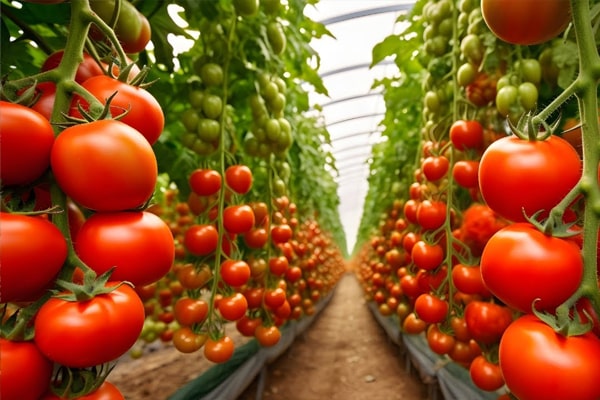
Tomato farming in a polyhouse is growing indeterminate hybrid tomatoes in a climate-controlled structure, where a single crop yields continuously 80 to 120 tonnes per acre per cycle, roughly 3 to 5 times an open field. Setup costs run about ₹25 to 38 lakh per acre for a naturally ventilated polyhouse, and more for a hi-tech unit, but the system delivers premium, export-grade quality, year-round harvests, and potential net profits of ₹15 to 20 lakh per acre.
Drawn from over two decades of protected-cultivation experience, this guide covers why tomato suits a polyhouse, the right structure and varieties, nursery to harvest, costs, returns, subsidies, and the mistakes to avoid.
Why Tomato is Well-Suited for Polyhouse Cultivation
Tomato thrives under protected cultivation because the polyhouse removes nearly every weather- and pest-related risk that caps open-field yields.
It eliminates rain damage and waterlogging, manages the heat that causes flower drop, and sharply cuts whitefly-borne leaf curl virus and fruit borer through insect netting and a controlled entry. Crucially, because the climate is controlled, you are no longer tied to a Kharif or Rabi window: you can grow tomatoes off-season, in summer and monsoon, when open-field supply collapses and mandi prices peak. That off-season premium is where polyhouse tomato makes most of its money.
| Parameter | Open Field | Polyhouse |
|---|---|---|
| Variety type | Determinate / semi-determinate | Indeterminate hybrid |
| Yield per acre per cycle | 10–20 tonnes | 80–120 tonnes |
| Production months per cycle | 2–3 | 8–10 (continuous picking) |
| Fruit quality / export grade | Inconsistent | Uniform, premium |
| Weather risk | High | Very low |
Which Polyhouse Structure Works for Tomato
For tomatoes in most of India, a naturally ventilated polyhouse (NVPH) is the recommended structure, because it gives enough climate control for high yields without the running cost of a fully climate-controlled greenhouse.
A fan-and-pad climate-controlled greenhouse adds cooling but is justified only in very hot, dry zones or premium cherry/exotic programmes, while a shade-net house is best seen as entry-level rather than a serious commercial structure. For commercial tomato, build an NVPH with a minimum gutter height of around 4–4.5 metres: tomato is tall and heat-sensitive, and the extra height creates an air buffer that keeps the canopy cooler and allows several metres of vertical growth. In hot, dry regions add cooling or shade; in moderate climates a standard tall NVPH performs excellently. Budget-first growers should prove the economics on a small unit before expanding.
Best Varieties of Tomato for Polyhouse
The best tomato varieties for a polyhouse are indeterminate F1 hybrids, because they grow vertically and keep fruiting continuously for the entire cycle.
Open-field determinate and semi-determinate types set all their fruit in a short burst and stop, wasting the polyhouse's long-season advantage. Choose indeterminate hybrids bred for protected cultivation, prioritising Tomato Leaf Curl Virus (ToLCV) tolerance, firm fruit with a long shelf life (12–18 days), and uniform size and colour for grading. Premium cherry tomato hybrids sell at ₹80–₹150/kg in the right markets. Because performance is region- and season-specific, confirm the exact hybrid and seed rate (roughly 60–80 g/acre) with a trusted local supplier. Always use fresh F1 hybrid seed, not saved open-pollinated seed, which loses its traits.
Raising Healthy Tomato Seedlings (Nursery Stage)
Strong crops start in the nursery: raise seedlings in pro-trays of sterile coco peat inside a protected, insect-netted space, and transplant at about 25–30 days when they have 4–5 true leaves and a firm root ball.
Tray-raised seedlings give uniform germination, clean roots, and a head start against soil-borne disease. Keeping the nursery insect-netted is critical, so virus-carrying whitefly cannot infect plants before they reach the main house. Harden seedlings for a few days before transplanting, plant in the cooler part of the day, water in through the drip line, and discard any weak or off-type plants.
Setting Up Your Polyhouse for Tomato
A correct setup means getting the essentials right: clean medium and good water, correct spacing, precise fertigation, vertical support, pollination, and pruning.
Growing medium, bed prep, and water quality
Decide between soil and a soilless medium: soil is cheaper but accumulates nematodes over cycles, while coco peat gives cleaner roots at higher cost. Either way, use raised beds for drainage, sterilise soil-grown beds (solarisation) before planting, and test irrigation water for EC and pH before designing fertigation, since poor water quietly undermines nutrient uptake and clogs drip lines.
Spacing and plant population
Plant in paired rows with 20–30 cm between plants and wide pathways for airflow, giving a working population of 10,000–12,000 plants per acre.
Irrigation and fertigation
Drip irrigation with integrated fertigation is non-negotiable. It cuts water use 70–80% versus flood irrigation and lets you feed precise nutrient doses. Pair with mulching film to conserve moisture and suppress weeds.
Crop training and trellising
Indeterminate tomato must be trained vertically on strings: each plant is clipped to an overhead wire, twisted around the string as it grows, and leaned and lowered over the season. This keeps fruit clean and improves light and airflow.
Pollination
A sealed polyhouse has no wind or bees, so tomato needs assisted pollination. Growers either vibrate the flower trusses mechanically (an electric pollinator). Skipping this directly reduces fruit set and fruit size.
Pruning
Manage each plant to a single main stem, removing side shoots (suckers) regularly and stripping old lower leaves after their trusses are picked. Disciplined pruning is one of the strongest levers on yield and fruit size.
Climate Requirements for Tomato in Polyhouse
Tomatoes grow best at a daytime temperature of 21–27°C, a night temperature of 15–20°C, and relative humidity around 60–70%.
Sustained heat above ~32°C causes flower drop, while nights below ~10°C slow set. Keep humidity below ~85%, since persistently high humidity is the biggest driver of fungal disease and also hampers pollination. Adjust seasonally: maximise ventilation and shade in summer, keep air moving while staying closed to rain in monsoon, and close vents at night in winter.
Pest and Disease Management for Tomato Farming in Polyhouse
The main threats are whitefly-borne leaf curl virus, fungal blight and Botrytis, fruit borer, and root-knot nematodes, best controlled by prevention first, with chemical or biological intervention only when monitoring shows it is needed.
The structure itself is your biggest tool: a sealed, insect-netted house with a double-door entry keeps most problems out. Treat the rest as Integrated Pest Management (IPM), not a spray schedule.
• Whitefly / ToLCV (most serious): there is no cure once infected, so control the vector. Keep 40–50 mesh netting intact, use yellow sticky traps, choose ToLCV-tolerant hybrids, and rogue out infected plants early.
• Blight and Botrytis: driven by humidity and leaf wetness. Keep humidity below ~85%, ensure airflow, remove old leaves, and rotate fungicides only when needed.
• Fruit borer (Helicoverpa): monitor with pheromone traps, use biocontrols like Trichogramma and Bt/neem before harsh chemistry.
• Root-knot nematodes and wilts: manage with soil solarisation, resistant rootstocks, rotation or media replacement, and good sanitation.
• Thrips, aphids, mites: monitor with sticky traps, use biocontrols, keep the interior weed-free.
• IPM principle: exclude pests with the structure, monitor with traps, intervene early with biologicals, and use chemicals as a last and rotated resort, protecting both yield and the low-residue quality that makes protected tomato worth growing.
Harvesting and Post-Harvest Handling
Polyhouse tomato is picked every 3–5 days across the cycle, harvested at the breaker (first-colour) stage for distant markets, then graded, packed, and cooled to protect shelf life and avoid the 20–30% of value typically lost after picking.
Harvest in the cooler part of the day and handle fruit gently. Grade by size, colour, and firmness to meet buyer standards and unlock premium pricing, discarding cracked fruit. Pack in clean crates rather than overfilled sacks, and move produce into shade or cold storage quickly; firm hybrids then hold a 12–18 day shelf life, enabling retail and export supply.
Cost of Tomato Polyhouse Farming: Real Numbers
A naturally ventilated tomato polyhouse typically costs ₹28–40 lakh per acre to build, plus roughly ₹3–6 lakh per crop cycle in inputs, with periodic film and maintenance on top.
Note: Costs vary by specification, region, material prices, and automation. Treat these as planning estimates and confirm current quotes.
| Structure type | Approx. per sq m | Approx. per acre |
|---|---|---|
| Low-cost / Net House | ₹300–₹400 | ₹12–18 lakh* |
| Standard NVPH | ₹800–₹1,000 | ₹32–40 lakh |
| Hi-tech / fully automated | up to ₹2,500 | ₹1 crore+ |
*Some basic 1-acre builds start around ₹30 lakh; costs include structure, film, irrigation, and installation, excluding land.
Per-cycle inputs (seed/seedlings, media, nutrients, plant protection, trellising, mulch, labour) total ₹3–6 lakh, with labour and nutrients the largest items, since training, pollination, and repeated picks make the crop labour-intensive. Budget too for the UV film, which needs replacing every 3–4 years, plus net and drip upkeep, so your multi-year return stays realistic. First harvest arrives 60–75 days after transplanting, so structure plus first-cycle inputs is the capital you must arrange before revenue begins.
Yield and Returns: What to Expect
A well-managed crop yields 80–120 tonnes per acre per cycle, with most growers running one long cycle per year of 8–10 months of continuous picking; strong growers push the upper end.
Returns depend as much on where you sell as on what you grow, so plan the channel before planting: local mandi is easiest but most volatile; modern retail and supermarket supply reward consistent grade with steadier prices; processors and contract buyers give steady offtake; and export offers the highest realisation if grading, shelf life, and residue standards are met. Potential net profit is commonly cited around ₹15–20 lakh per acre under good management, with investment often recovered within 2–3 years with subsidy. Because tomato prices are volatile, model conservative, average, and optimistic scenarios and secure a buyer before you build.
| Metric | Open Field | Polyhouse |
|---|---|---|
| Yield per acre per cycle | 10–20 tonnes | 80–120 tonnes |
| Production window | Seasonal | Off-season + main season |
| Price realisation | Market-cycle dependent | Premium / off-season |
| Risk of total crop loss | High | Low |
Subsidies Available for Tomato Polyhouse Farming
Tomato polyhouse projects can access capital subsidy via the NHB/MIDH route and interest support via the Agriculture Infrastructure Fund (AIF), often with state top-ups.
Important: Scheme rates, caps, and windows are revised periodically. Verify current guidelines on official portals before applying.
The NHB (under MIDH) offers a credit-linked, back-ended subsidy of up to ~50% of project cost, capped around ₹56 lakh in general areas (higher limits and lower area thresholds in NE and hilly regions). You build first via a bank loan, and the subsidy is credited after inspection. Apply at nhb.gov.in. The AIF adds a 3% interest subvention on loans up to ₹2 crore for up to 7 years, plus credit-guarantee cover, and can be converged with other schemes (agriinfra.dac.gov.in). Many states add a horticulture top-up; check your state horticulture or DBT portal for current rates.
Common Mistakes When Growing Tomato in Polyhouse
The most common mistakes are using the wrong variety, planting weak seedlings, skipping pollination, mismanaging humidity, neglecting pruning, and building without a buyer.
• Planting determinate/field varieties instead of indeterminate hybrids, capping yield.
• Transplanting weak or whitefly-exposed seedlings, which permanently limits the crop.
• Skipping assisted pollination, reducing fruit set and size in the windless house.
• Poor humidity control, inviting blight and Botrytis, especially in monsoon.
• Delaying pruning and de-suckering, creating a humid, disease-prone canopy.
• Building first, finding buyers later, risking a sell-off at a loss.
How to Start Your Tomato Polyhouse Project
To start, confirm your market and water source, choose the right NVPH and indeterminate hybrid, plan planting around the off-season window, then sequence your subsidy and loan before construction.
Decide who will buy and at what grade, confirm a reliable water source (tested for EC and pH), pick the right structure for your climate, and time transplanting so peak harvest lands in the high-price off-season. Because the subsidy is back-ended, lock your NHB and loan plan before you build.
| Stage | Typical duration |
|---|---|
| Planning, DPR, loan & subsidy paperwork | 1–3 months |
| Construction & system install | 1.5–3 months |
| Nursery, transplanting to first harvest | 2.5–3 months |
| Total to first harvest | ~6–9 months |
Getting the structure, film, and crop system right from day one separates an average crop from a profitable one. Agriplast has supported thousands of farmers across India and worldwide with greenhouse films and protected-cultivation solutions over more than two decades. If you're planning a tomato polyhouse, connect with the Agriplast team for guidance matched to your region, budget, and crop plan.
Frequently Asked Questions (FAQ)
How much does a 1-acre tomato polyhouse cost in India?
Roughly ₹25–38 lakh per acre to build (around ₹800–₹1,000 per sq m), plus ₹3–6 lakh per crop cycle for inputs. The film needs replacing every 3–4 years.
What is the tomato yield per acre in a polyhouse?
About 80–120 tonnes per acre per cycle for a well-managed indeterminate crop, roughly 3 to 5 times an open field's 10–20 tonnes.
Which tomato variety is best for polyhouse farming?
Indeterminate F1 hybrids bred for protected cultivation, with leaf-curl-virus tolerance, firm fruit, and long shelf life. Cherry tomato hybrids fetch premium prices. Confirm the hybrid with a local supplier.
How are tomato seedlings raised for a polyhouse?
In pro-trays of sterile coco peat inside a protected, insect-netted nursery, transplanted at about 25–30 days with 4–5 true leaves.
Do polyhouse tomatoes need pollination?
Yes. With no wind or bees indoors, tomato needs assisted pollination, either mechanical vibration of the trusses or introduced bumblebees, for good fruit set and size.
Is tomato polyhouse farming profitable in India?
Yes, mainly from higher yields and off-season premiums, with potential net profit often cited around ₹15–20 lakh per acre and payback in 2–3 years with subsidy. Prices are volatile, so secure a buyer first.
What subsidy is available for a tomato polyhouse?
NHB (under MIDH) gives up to ~50% capital subsidy, capped around ₹56 lakh per project; AIF adds a 3% interest subvention on loans up to ₹2 crore for 7 years. Many states add a top-up. Verify current rates on official portals.
What temperature and humidity do tomatoes need in a polyhouse?
Daytime 21–27°C, night 15–20°C, and humidity around 60–70%. Heat above ~32°C causes flower drop; humidity above ~85% promotes disease.
When is polyhouse tomato harvested?
In repeated picks every 3–5 days, at the breaker stage for distant markets, then graded, crated, and cooled to hold a 12–18 day shelf life.
How long until the first harvest?
About 60–75 days after transplanting, or roughly 6–9 months from project decision including planning, construction, and the nursery.
Recent Posts
Your Farm. Your Future.
Every great harvest starts with the right conversation. Let our experts design a polyhouse built around your land, crop, and climate.
Talk to an ExpertFrequently Asked Questions
In this video, Abhishek Bhatt, Director of Agriplast Protected Cultivation, will provide a comprehensive breakdown of why Agriplast Polyhouse outperforms other polyhouses in terms of yield. He'll elucidate on key features like superior design, Israeli technology application, and optimal environmental control. The design facilitates enhanced ventilation, ensuring ideal growing conditions. Additionally, the use of Israeli technology, tailored for Indian agricultural needs, plays a crucial role in maximizing yields. Stay tuned to gain valuable insights into how Agriplast Polyhouse revolutionizes protected cultivation for superior agricultural outcomes.
A greenhouse is a transparent structure which is made using glass where plants are grown under certain climatic conditions. The agricultural industry has got many innovations, and the greenhouse technology makes use of modern and smart technology to give optimum facilities to the plants for their better and more efficient growth all around the year. Polyhouse is a kind of greenhouse where polyethene plastic material is used to create the polyhouse instead of the use of glass.
A greenhouse is designed to grow plants even in adverse climatic conditions. The translucent glass that covers the greenhouse gives the plants enough light to let them carry the photosynthesis process easily by absorbing light energy. Since the greenhouse is in an airtight condition, a sufficient amount of sunlight makes the greenhouse warmer from within than the outer atmosphere.
Greenhouse not only warms the greenhouse from within only in summers but in winters; it allows for an artificial heating solution which is effective but is a bit expensive. Some other inexpensive ways of warming up your greenhouse are:
- If you cover the inside of a greenhouse structure with a bubble layer wrap, you will observe a reduction in heat loss.
- Good power supply availability will allow you to add electric fan heaters to circulate hot air within the greenhouse for the plant's growth.
- You can also get electric greenhouse heaters installed that come with an inbuilt thermostat and works automatically when the temperature of the outer surroundings goes down.
Greenhouse benefits you in several different ways, which are listed below:
- Helps in producing fresh crops at any time of the year.
- The facility of producing the crops all around the year, even in adverse climatic conditions.
- The greenhouse allows the farmers to create an exclusive environment for the better plant growth.
- Protects crops from adverse climatic conditions.
- The light energy within a greenhouse is distributed evenly to all the plants.
- Greenhouse installation makes it easy for the farmers to grow crops with less use of pesticides.
- Greenhouse setup helps in saving the total usage of resources.